
The Engineering and Mechanics Behind Smart Sensor Trash Cans: How Touchless Waste Bins Operate
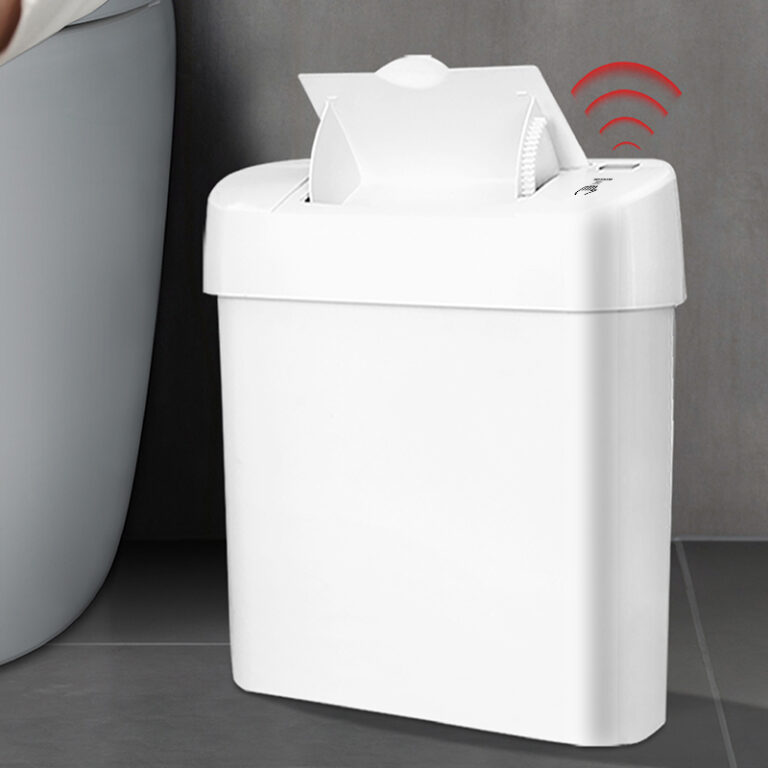
Modern domestic and office environments increasingly rely on automated appliances to improve hygiene, convenience, and waste management efficiency. Among these, the touchless waste receptacle has evolved from a luxury gadget into a household staple. Understanding the underlying electronic mechanics, sensor architectures, and functional trade-offs of a smart sensor trash can reveals the engineering precision required to manufacture these everyday devices.
1. Core Electronic and Sensor Architecture
Unlike traditional mechanical bins that depend purely on foot pedals or manual lifting, a smart sensor trash can integrates active electronic systems to detect proximity and drive mechanical movement.
- Infrared (IR) Transceivers: The primary trigger mechanism relies on an infrared emitter and detector pair positioned near the rim of the lid. The emitter projects a continuous or pulsed beam of invisible infrared light. When an object (such as a hand or a piece of waste) enters the detection zone, the light reflects back to the photodiode detector.
- Microcontroller Unit (MCU): Acting as the central processing unit, the MCU monitors the voltage change from the IR detector. Once the signal crosses a pre-programmed threshold, the MCU executes the opening routine.
- Micro-DC Motor and Gearbox: To translate electrical signals into physical motion, a compact direct-current motor coupled with a gear reduction system provides the torque necessary to lift the weighted lid smoothly.
- Power Management Circuitry: Powered by alkaline batteries (such as AA or D cells) or internal rechargeable lithium-ion packs, efficient standby power circuits ensure that the quiescent current draw is minimal, allowing batteries to last for months of normal operation.
2. Operational Sequence and Control Logic
The interaction loop between a user and a smart waste bin follows a precise electronic sequence designed to balance responsiveness with energy conservation.
Step One: Proximity Detection and Signal Processing
The sensor continuously or intermittently pulses its IR beam. When a user approaches within the active zone (typically 6 to 12 inches above the sensor window), the reflected light intensity spikes. The detector converts this optical change into an electrical voltage variation sent directly to the MCU.
Step Two: Motor Actuation and Lid Opening
Upon verifying the sensor trigger, the MCU reverses or applies polarity to the DC motor, driving the gear linkage to lift the lid. Modern models incorporate soft-start and soft-stop profiles to reduce mechanical wear and eliminate jerky movements.
Step Three: Hold-Open and Automatic Closure
The MCU initiates an internal software timer (usually lasting 3 to 5 seconds) once the user’s hand leaves the detection field. If the sensor detects continued presence, the timer resets. Once the countdown expires, the motor reverses direction, lowering the lid gently into a sealed position.
3. Engineering Advantages and Hygiene Implications
The shift toward touchless waste containment is primarily driven by sanitary and ergonomic benefits rooted in its design.
- Reduction of Cross-Contamination: Traditional foot pedals and manual lids concentrate germs on high-touch surface areas. By eliminating physical contact entirely, touchless bins significantly reduce the transfer of bacteria and viruses in kitchens and shared office spaces.
- Ergonomic Convenience: When carrying bulky or messy kitchen waste, waiting for an automated lid to retract eliminates the awkward balancing act required to step on a mechanical pedal.
- Integrated Odor Suppression: Many advanced enclosures feature sealed gasket rims combined with activated carbon filter compartments under the lid, actively trapping volatile organic compounds and decomposing waste odors.
4. Mechanical vs. Automated Limitations
While automated bins offer superior hygiene, they introduce distinct engineering vulnerabilities compared to purely mechanical receptacles.
- Mechanical Wear and Tear: The inclusion of gears, hinges, and micro-motors introduces points of mechanical failure over extended cycles, whereas traditional foot-pedal bins rely on simple spring-and-lever physics.
- Power Dependency: Smart cans require active electrical power. When batteries deplete or charging fails, users must rely on manual overrides or risk losing automated functionality until maintenance is performed.
- Environmental Sensitivity: Direct exposure to bright sunlight or intense infrared interference can occasionally trigger false positives in basic optical sensors, requiring calibrated sensor thresholds or dual-technology proximity detection (such as combined IR and motion radar).