
What Aerial Roots Actually Are
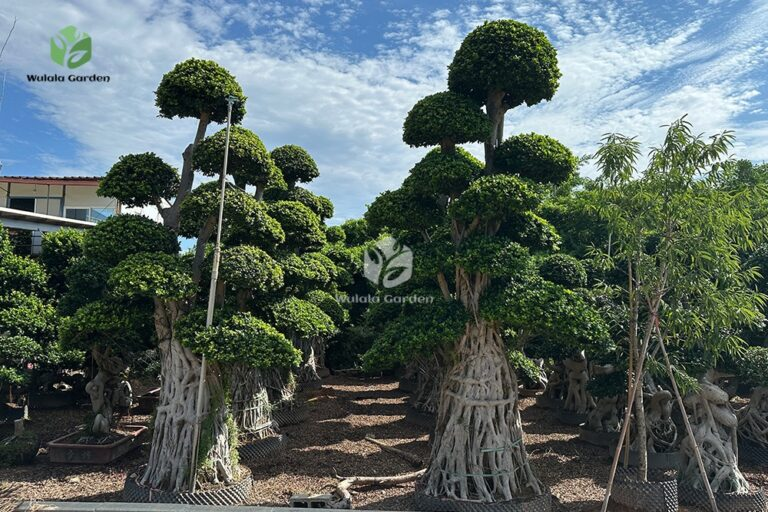
Aerial roots are exactly what the name suggests: roots that develop above the soil line rather than below it. On ficus species, they emerge from the trunk and branches, initially appearing as small nubs or bumps before elongating into thick, rope-like structures that reach downward toward the ground. In the wild, these roots serve two critical functions.
The first is structural support. Many ficus species begin life as epiphytes, germinating in the canopy of a host tree rather than on the forest floor. As the seedling grows, it sends aerial roots down toward the soil. Once these roots reach the ground, they anchor the plant, thicken over time, and eventually merge with the trunk to form a lattice of additional support. Over decades, this structure can become strong enough to strangle and outlive the original host tree.
The second function is nutrient and moisture absorption. In humid tropical environments, aerial roots can absorb water directly from the air and from rainwater running down the trunk and branches. This capability gives ficus trees a survival advantage during dry spells when soil moisture is scarce.
Why Indoor Ficus Plants Develop Them
Indoor ficus plants develop aerial roots for many of the same reasons their wild counterparts do, though the triggers differ. Humidity is the primary driver. Species like Ficus elastica, Ficus benjamina, and Ficus lyrata all originate in tropical regions where humidity levels frequently exceed 70 percent. When indoor conditions mimic that environment, the plant responds by producing aerial roots.
Humidity isn’t the only factor. Genetics play a significant role, since some ficus varieties are simply more prone to producing aerial roots than others. Light levels, overall plant health, and maturity also influence development. A mature, vigorously growing ficus is more likely to produce aerial roots than a young or struggling plant.
It’s worth noting that aerial roots ficus are not a sign of disease or distress. They are a normal part of how these plants grow. In many cases, they indicate that the plant is thriving and responding positively to its environment.
Managing Aerial Roots in Indoor Settings
For indoor growers, aerial roots present a practical question: leave them, train them, or remove them? Each approach has merit depending on what the grower wants.
Leaving them alone is the simplest option. Aerial roots are harmless to the plant and, in some cases, can add character. For those growing ficus as bonsai, aerial roots are often desirable because they contribute to the aged, established appearance that bonsai enthusiasts aim to achieve.
Training aerial roots is another option. If a root is long enough to reach the soil, it can be guided gently into the pot, where it will eventually take root and contribute to the plant’s overall stability. Some growers wrap aerial roots with damp sphagnum moss to encourage them to grow longer and reach the soil more quickly.
Removing aerial roots is a matter of personal preference. If the look doesn’t appeal, they can be cut back with clean, sharp shears. Cutting aerial roots does not harm the plant, though it does remove a small amount of the plant’s support and absorption capacity. For indoor specimens that are already well-supported by their root ball and sturdy trunk, this is rarely a problem.
A Note on Ficus Benghalensis and Other Species
Not all ficus species produce aerial roots in the same way. Ficus benghalensis, the banyan tree, is famous for producing massive aerial root systems that become secondary trunks and can spread across acres of land. Ficus religiosa, the sacred fig, produces distinctive heart-shaped leaves and aerial roots that are culturally significant in South Asia.
For indoor growers, the most common aerial root producers are Ficus elastica, Ficus benjamina, and Ficus lyrata. Each species produces roots in slightly different ways and at different stages of maturity. Observing how a particular plant behaves over time gives the best indication of what to expect.
Responding to Aerial Roots as a Sign of Health
It helps to reframe aerial roots as a positive indicator rather than a problem. A ficus that produces aerial roots is generally a ficus that is receiving adequate light, warmth, and humidity. The roots are the plant’s way of expanding its capacity to absorb water and nutrients while adding structural support.
For growers who want to encourage aerial root development, increasing humidity around the plant is the most effective strategy. Grouping plants together, using a pebble tray, running a humidifier, or misting regularly can all raise ambient humidity and encourage root production. Providing bright, indirect light and maintaining consistent temperatures further supports healthy growth.
Whether you choose to leave aerial roots alone, train them into the soil, or trim them back, understanding what they are and why they form makes it easier to care for ficus plants with confidence. They are not a sign of trouble. They are a sign of a plant doing exactly what nature designed it to do.
