
The Business Case for IML Robots: Labour, Speed and Label Quality
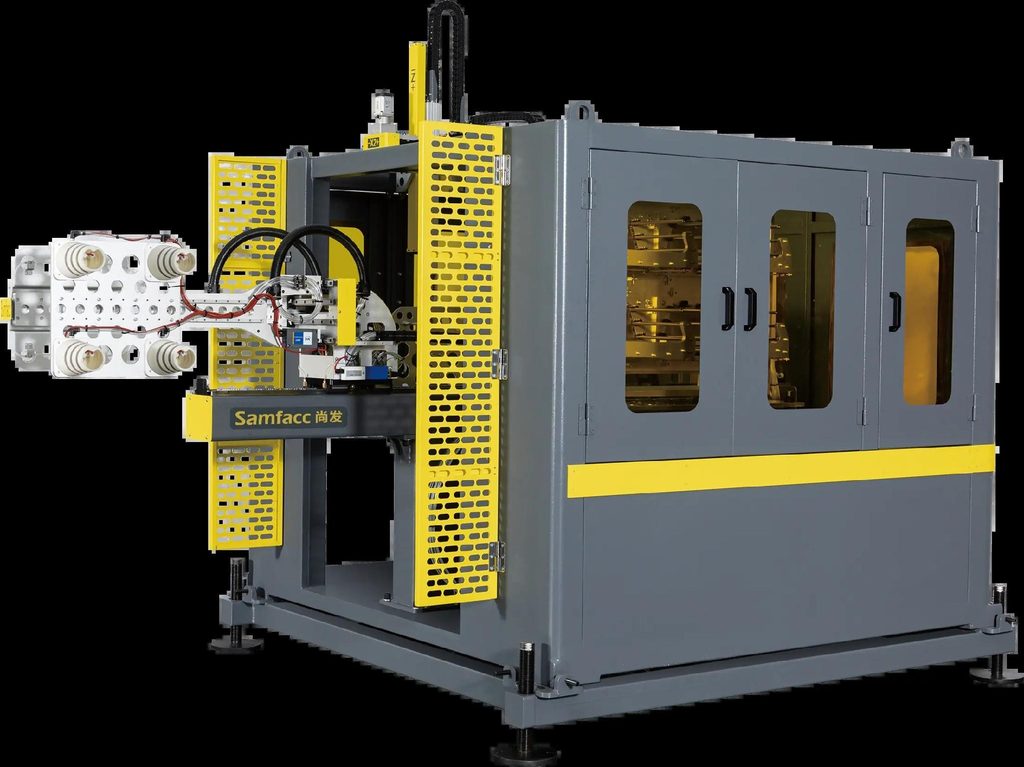
What Manual Labelling Really Costs
Ask a plant manager what labelling costs and you will hear the price of the labels. Ask the finance director and you will hear wages for the labelling line, the supervisor’s time, rework, agency staff at peak season, and the turnover treadmill of a job nobody stays in. A worker labelling tubs might manage a few hundred parts an hour on a good day — half that with fatigue and a fiddly label. Multiply by shifts and by a year, and the ‘cheap’ option becomes a payroll with a labelling hobby. It is exactly the calculation that leads plants to an iml robot.
Then there is the quality lottery. Human-applied labels skew, wrinkle, and drift — a degree here, a millimetre there — and every misaligned one is a reject or a pack that looks second-rate on the shelf. Supervisors only sample; they do not inspect every tub, so imperfect packs ship. Customers notice first. An iml robot removes the human hand entirely: the label goes in with the moulding, positioned by machine repeatability, identical on part one and part ten thousand. Labour saving gets headlines; consistency is what quality managers quietly celebrate.
The Cycle-Time Arithmetic
Here is the arithmetic that usually decides the purchase. A thin-wall container moulds in four to six seconds, and an iml robot places its label inside the mould’s natural open time — the arm completes its move during the mould’s ordinary open phase for ejection — so labelling adds effectively nothing to the cycle. Output stays at the mould’s maximum. Offline labelling cannot touch that: parts must cool, convey, singulate, orient, label, and re-pack — each step with its own machine, jams, and attention.
A five-second cycle is 720 parts an hour, around the clock, labelling included. Matching that offline needs a labelling line at the same rate with near-zero downtime — plus someone watching it. The iml robot does not take breaks, slow down at 3 a.m., or call in sick. When buyers model the investment, this is the line that moves: not the robot’s price, but output per labour-hour of the whole cell, before and after.
Scrap, Rework, and the Quiet Drain
Scrap is where labelling costs hide. Every misapplied adhesive label is stripped and relabelled — if the adhesive lets go — or scrapped. Label waste adds up: liners, backing paper, misfeeds, uncounted roll ends. Scrap rates on manual lines commonly run a few percent; on millions of parts a year, that is a second production line’s worth of material in the bin. It is the kind of number that makes an iml robot look less like automation and more like arithmetic.
In-mould labelling collapses most of this. No adhesive, no liner waste, no separate application step to go wrong — the label is either placed correctly by the iml robot or the part never gets made, since a missed pick is caught before injection. Label scrap falls to the odd misfeed at the magazine, counted in labels per shift, not percentage points. Plants tracking Overall Equipment Effectiveness see it fast: less rework, less waste, decoration rejects rounding to zero.
The Shelf-Price Premium
The other half of the case sits on the retail shelf. In-mould decoration allows full-wrap, edge-to-edge photographic graphics — pack design that makes a margarine tub look designed rather than commoditised. Brands pay for that. A moulder offering in-mould packs quotes higher per-part prices than one offering plain tubs with paper labels, — the customer buys shelf impact, not just a vessel. In tenders, the moulder with an iml robot on the floor bids a premium product while the manual shop bids a commodity.
There is a defensive angle. Retail buyers consolidate suppliers, and survivors are the ones whose packs look like the category leader’s. Once one dairy brand goes full-wrap in-mould, competitors follow or look dated — and for the moulder, an iml robot turns that trend into purchase orders. The premium is not just margin; it is relevance, and relevance wins the next contract. Buyers who grasp this stop comparing robot prices to labeller prices and start comparing against the contracts it helps win.
A Worked Payback Example
Take a mid-size food container moulder on two shifts: labelling labour €60,000 a year across operators and supervision; scrap and rework on decoration another €25,000; the in-mould premium over plain tubs worth €40,000 in added margin on existing volumes. That is €125,000 a year against an installed iml robot cell — robot, integration, magazines, commissioning — of €80,000–€120,000. Payback: eight to fourteen months. Halve the benefits and it still clears inside two years, which is why finance directors sign these off fast.
Your numbers will differ — rates, volumes, your market’s premium — but the structure does not. Model honestly: avoided agency staff, freed supervisor hours, reclaimed floor space, and retired equipment costs. Most buyers who run this math on an iml robot flip the question from ‘can we afford it’ to ‘can we afford not to’ — provided the volumes are there, which brings the honest caveat.
When the Numbers Don’t Work
No honest business case skips where it fails. In-mould labelling is a volume game: mould, robot, and integration are fixed costs needing tens — usually hundreds — of thousands of parts to amortise. Short runs, monthly artwork changes, or lumpy volumes let changeover economics and idle capital eat the return. Very small parts with fiddly handling can also push the spec — and price — upward.
The test is simple: take your steadiest high-volume line, the one running months with the same graphics, and model only that. If payback works there, the iml robot earns its place; future lines follow. If it fails on your best line, it fails on your worst. Run that calculation before the sales presentations start — buy with confidence or walk away with budget intact. Both are good outcomes.