
Choosing a Radar Speed Sign: A Buyer’s Guide for Municipalities and Communities
Start with the street, not the sign
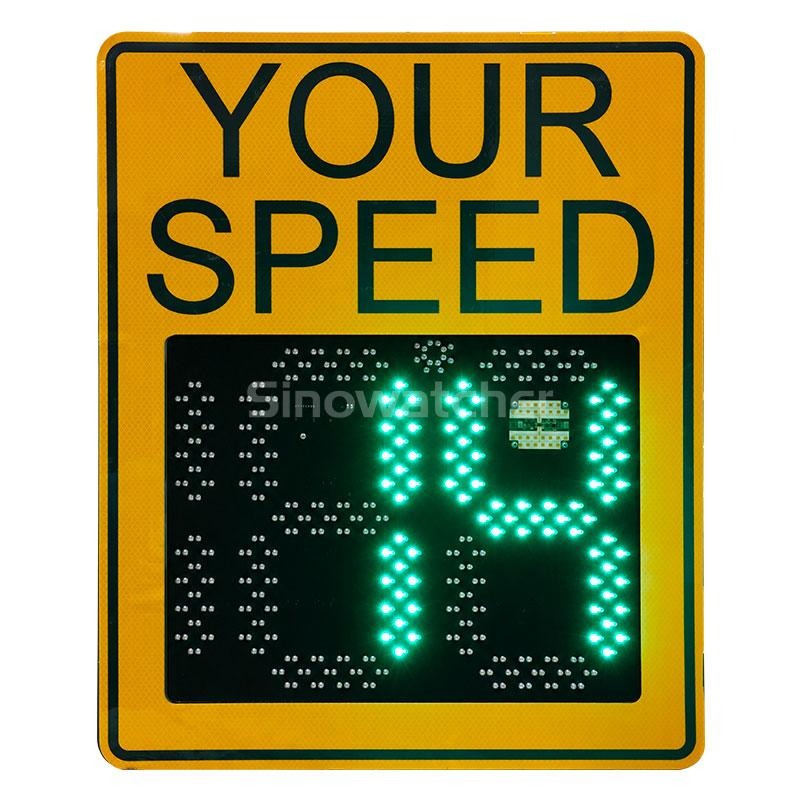
Before comparing models, stand on the road where the sign will live. A radar speed sign that works beautifully on a quiet residential street can fail on a wide arterial, not because the technology is weak but because the viewing distance is wrong. The rule of thumb is simple: drivers need to read the digits early enough to react. For a 30 mph (50 km/h) street, drivers should see the display clearly from at least 300 feet (90 metres); on a 45 mph road, push that to 500 feet. That distance dictates the LED character height you need — roughly 12 inches for neighbourhood streets and 18 inches or more for higher-speed corridors.
This is why the first question on any radar speed sign checklist should be about display size rather than price. A small display on a fast road gets ignored, and an oversized display on a cul-de-sac wastes budget. Reputable manufacturers publish visibility distances for each character height, so ask for those figures and match them to the posted limit.
Radar range and detection quality
The radar module is the heart of the sign. Look for a radar speed sign that detects approaching vehicles from at least 400 metres on open road — shorter ranges mean the display lights up late, giving drivers little time to slow. Beam width matters too: a beam that is too wide can pick up traffic in the opposite lane or on a parallel service road, flashing speeds for vehicles the sign was never meant to address.
Quality matters more than raw numbers. A well-tuned radar speed sign filters out parked cars, pedestrians, and swaying trees so the display only reacts to genuine approaching traffic. Ask vendors how their units handle multi-lane roads and whether sensitivity is adjustable in the field. Adjustable sensitivity lets your crew fine-tune the sign after installation instead of living with false triggers for years.
Power options: solar, AC, or battery
Power is where many buying decisions go wrong. If mains power is available at the pole, an AC-powered radar speed sign is the simplest and most reliable choice — wire it in and forget it. But trenching cable to a remote pole can cost more than the radar speed sign itself, which is where solar earns its place. A solar-powered unit with a properly sized panel and battery bank can run for years with no utility bill and no digging.
The catch is sizing. A panel that is barely adequate in summer will starve the sign in winter, when days are short and LEDs run longer. Ask for the autonomy rating — how many sunless days the unit can operate — and insist on at least five. For temporary deployments, battery-only models that a crew can swap or recharge are worth considering, though they add a maintenance round to someone’s week.
- Autonomy: how many sunless days before the display dies?
- Panel wattage, and whether it is sized for your latitude’s winter sun
- Battery chemistry and the expected replacement interval
- Whether the sign dims or enters low-power mode when the battery runs low
Data logging and connectivity
The most underrated feature of a modern radar speed sign is its memory. Units that log every detected speed with a timestamp turn a traffic-calming device into a traffic-study tool. Before-and-after speed data makes it easy to show councillors and residents that the investment is working — or to prove that a street needs stronger measures than a sign alone.
Decide how you want the data out. Basic radar speed sign models store weeks of readings for manual download via USB or Bluetooth; connected models push data over cellular so your traffic engineer can watch trends from the office. Cellular adds a subscription cost, so weigh it against how often you actually need fresh numbers. Either way, confirm the export format — CSV that drops straight into a spreadsheet saves real staff time.
Mounting and installation realities
A radar speed sign is only as good as its mounting. Most units ship with brackets for round or square poles, but verify the clamp range against the poles you actually own — rural agencies are full of odd-diameter wooden posts that standard clamps will not grip. Trailer-mounted and portable pole options exist for sites that rotate, and they are worth the premium if one sign must serve several complaint hotspots.
Height and angle deserve a site visit. Mount the display at driver eye level, roughly 2 to 2.5 metres, and aim the radar squarely down the approach lane. A radar speed sign that is tilted or blocked by a growing hedge will underperform no matter how good its electronics are. Budget half a day of crew time for the first installation and a follow-up check after two weeks.
Compliance and the questions to ask before you buy
Finally, check that the unit meets the standards your jurisdiction requires. In many regions, traffic signs must comply with MUTCD guidance in the United States or equivalent national standards elsewhere, covering everything from LED brightness to radar emissions. A compliant radar speed sign should also carry CE or FCC markings for its electronics. Ask the vendor for the certificates — a reputable supplier sends them without hesitation.
Then run this short checklist against every quote you receive:
- Published visibility distance matched to your speed limit
- Radar detection range with adjustable sensitivity
- Power autonomy rating in sunless days
- Data logging capacity and export format
- Mounting hardware that fits the poles you own
- Compliance certificates provided in writing
- Warranty length, and what it actually covers
Buy the sign that fits the street you have, not the street you wish you had. A radar speed sign chosen with this checklist will slow traffic, collect evidence, and still be working when the next budget cycle rolls around.