
Mono Amps Explained: Why Enthusiasts Run One Amplifier Per Channel
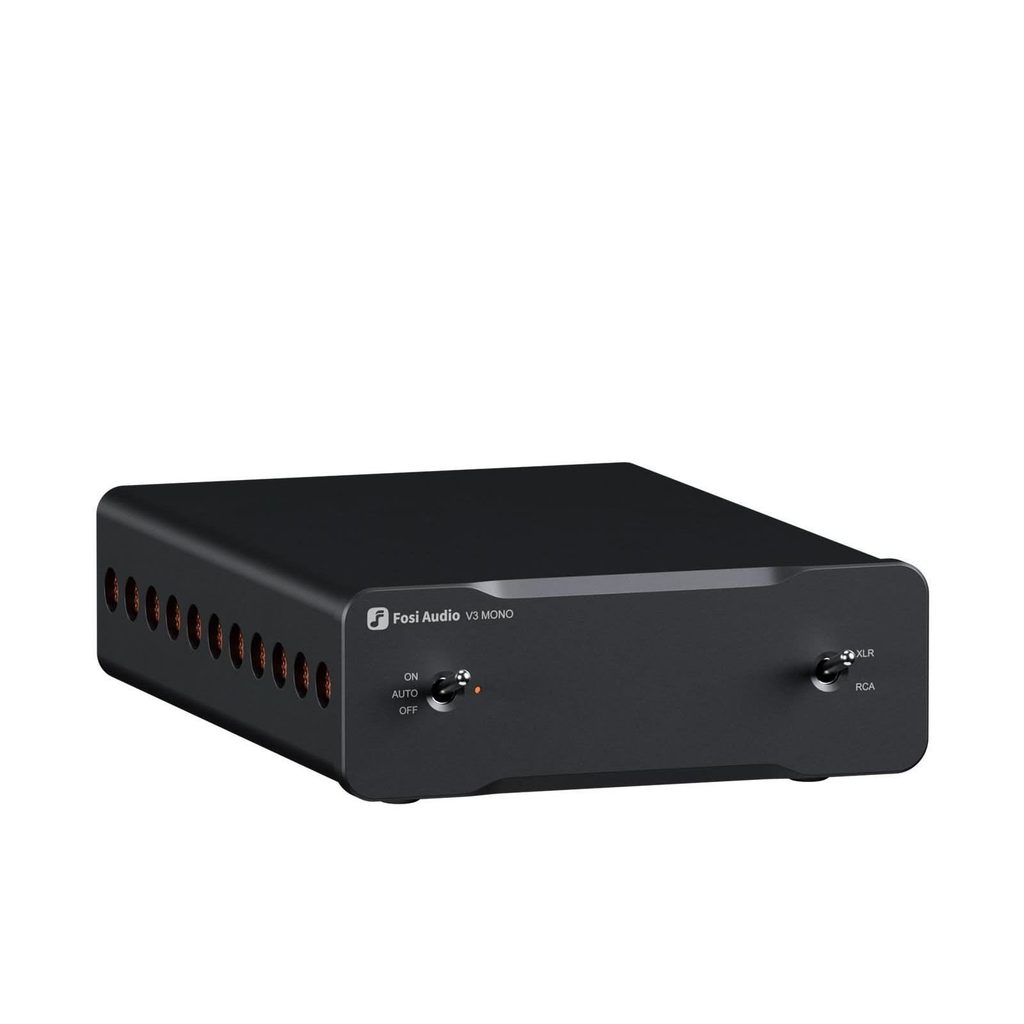
Open a high-end hi-fi catalogue and you will eventually meet the monoblock: an amplifier with one channel, one job, and a price that assumes you will buy two of everything. To newcomers it looks like extravagance formalised. To the enthusiasts who run them, it is simply what happens when you take the logic of a stereo amplifier and refuse to share anything between the left and right channels.
This guide explains what mono amps actually are, what separating the channels buys you in practice, where a single monoblock makes sense on its own — subwoofer duty is the classic case — and what the whole arrangement costs in space, heat and cabling before you commit to it.
What a Monoblock Actually Is
A monoblock is a power amplifier built for exactly one channel. It takes a line-level signal in, and it puts amplified power out to one loudspeaker. A stereo system therefore needs two of them, plus a preamplifier (or a source with a volume control) to feed and govern the pair. Nothing about the concept is exotic: mono amps are what you get when the two channels of a normal stereo power amplifier are given separate chassis, separate power supplies and separate everything.
The history is practical rather than mystical. Early high-power designs ran hot and heavy, and splitting them made each half liftable. Radio and cinema installations, which often needed one channel in one place, standardised on single-channel units long before home audio adopted them as an enthusiast statement.
Why Two Boxes Can Beat One
The engineering argument starts with the power supply, the part of an amplifier that everything else depends on. In a shared chassis, a loud bass passage in the left channel can momentarily pull the supply down for both. Monoblocks end that negotiation: each channel owns its transformer and reservoir outright. The measured results are typically better channel separation and a supply that does not breathe with the music.
Heat management, oddly, is part of the performance story. A power stage that runs warm needs air, and a chassis with one channel in it sheds heat from one set of devices instead of two. Designers can also space the sensitive input circuitry far from the transformer — in a shared case those neighbours are centimetres apart whether they like it or not. None of this is audible as a single dramatic effect. It accumulates as a lower noise floor, a steadier image, and an amplifier that behaves the same in the first minute of a session and the third hour, which is precisely the sort of unglamorous consistency that serious listeners are actually paying for.
Placement is the second, underrated argument. A monoblock can sit beside its loudspeaker, which keeps speaker cables very short — short cables are both electrically tidier and, not incidentally, cheaper than long exotic runs. The long connection becomes the interconnect from the preamplifier, which carries a small, well-behaved signal. If you are weighing up mono amps for a serious stereo system, that layout — preamp central, amplifiers out at the speakers — is the configuration the format was born for.
Monoblocks and Subwoofers
The most common single monoblock in the wild is not driving a main speaker at all. It is driving a passive subwoofer. Low bass asks for serious current into a heavy driver, and a dedicated mono amplifier sized for the job is a cleaner answer than asking a stereo unit to share its supply with one. Many home cinema and two-channel-plus-sub systems quietly rely on exactly this arrangement.
Bridged stereo amplifiers are the budget cousin here: many stereo designs can be switched to bridged mono, combining both channels to drive one speaker with roughly double the voltage swing. It is a legitimate way to test whether mono amps would improve your system before buying dedicated units, though bridged operation has its own limits — it dislikes very low speaker impedances, and it uses up your spare channel.
The Bill: Space, Heat and Cabling
Now the invoice, in non-monetary currency. Two monoblocks need two shelves or two patches of floor, two mains leads, and in warm rooms, genuine thought about ventilation, because two hard-working mono amps warm a room like a small radiator. You will also own two of everything that can hum, buzz or need servicing in twenty years’ time.
- Floor or rack space for two chassis instead of one.
- Twice the mains cabling, and standby power draw to match.
- Short speaker cables, but long interconnects to budget for.
- Heat: keep clear air above each unit, always.
Mono amps are not a sensible first amplifier, and nobody sensible recommends them as one. They are the end of a particular road: a listener with good speakers, a settled room, and a curiosity about what happens when each channel is given its own everything. For that listener, the format delivers exactly what it promises — separation, headroom, and a system that looks as serious as it sounds.