
Amplifier Types, Explained: How to Choose the Right One for Your System
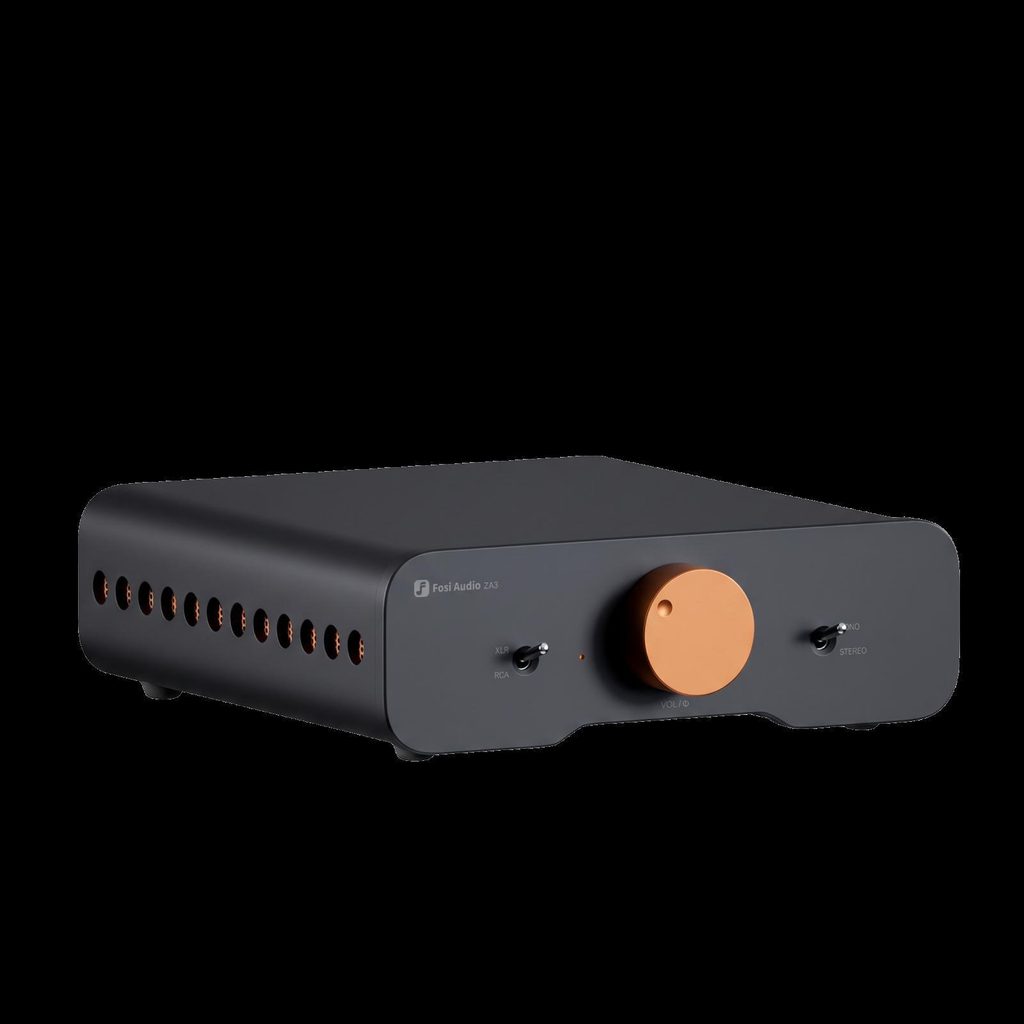
Every sound system, from a desk setup built around a laptop to a full living-room rig, contains an amplifier doing the unglamorous work of making a small signal strong enough to move loudspeakers. The confusion starts because that single job is sold in several different boxes, each with its own name, and the names describe where the amplifier sits in the chain rather than how good it is.
This guide walks through the main types — integrated, separate preamp and power stages, headphone models, and mono designs — and then turns to the only question that really matters: which type your system, your speakers and your habits actually call for. No type is the correct one in the abstract. Each is the correct one somewhere.
One Box Does It All: The Integrated Route
An integrated design combines two jobs that were once always separate. The preamp section selects sources and controls volume and tone; the power section does the heavy lifting. Put both in one case and you have the most popular amplifier format in home audio, for reasons of cost, shelf space and sheer convenience.
Choose this route when your system has a handful of sources and one pair of speakers, which describes most rooms. A good integrated amplifier will drive the great majority of speakers to satisfying levels, and the money saved over separates buys better speakers — the trade that almost always wins.
Separates: Two Boxes, Two Specialists
Splitting the jobs again gives you a standalone preamp and a power amplifier whose only controls may be a power switch. The point of the split is flexibility and isolation: the delicate low-level circuits live away from the hot, high-current ones, and you can upgrade or replace either half on its own schedule.
This is the route for demanding speakers, large rooms, or listeners who enjoy the hobby as a hobby. Be honest about the costs, though. A separates-based amplifier pairing asks for more shelving, more cables, and more money to reach the same total quality as a well-chosen integrated unit, so it should be a deliberate choice rather than a default assumption.
Small Boxes for Headphones and Desks
Headphones need the same two jobs at a much smaller scale, and a dedicated headphone amplifier is built for exactly that scale: millivolts of signal, modest power, and output impedance low enough to control small drivers properly. The headphone socket on a big amplifier is often an afterthought fed through resistors; a purpose-built unit is not.
Desk systems have blurred the categories usefully. Compact models now combine a DAC, a headphone output and speaker terminals in one small box, acting as a miniature amplifier for nearfield listening at a computer. For a bedroom or office setup, that single box often replaces three full-size ones without giving up anything you can hear.
Mono and Multichannel Variants
At one extreme sits the mono amplifier: a single channel in a single case, bought in pairs for stereo, or singly to drive a passive subwoofer. At the other extreme, home cinema receivers stack five, seven or more channels into one chassis for surround sound. Both are answers to specific questions — maximum channel separation in the first case, maximum channel count in the second — and neither is the natural starting point for a music system.
Warranty and service deserve a sentence too, because an amp is a long-term appliance. Designs from makers who publish schematics and keep spare parts available can be repaired a decade later by any competent technician, while sealed, software-dependent units depend on the maker’s continued goodwill. Weight is a crude but honest clue here: a conventional power supply is heavy, and a box with real heft usually contains real copper and aluminium rather than optimistic ratings. Buy the unit you can imagine owning in fifteen years, and the format question tends to answer itself.
Choosing Without Regret
Work through three questions and the choice usually makes itself. First, what must the amplifier drive? Demanding, low-sensitivity speakers argue for generous power, wherever it lives. Second, how many sources and rooms are involved? Complexity pushes toward integrated and receiver formats. Third, will you upgrade in stages? If yes, an integrated model with preamp outputs keeps a door open, letting a stronger power stage join later.
- Match power to your speakers’ sensitivity and your room size, not to a headline wattage.
- Count the inputs you use today, then add one spare for the source you have not bought yet.
- Prefer a volume control that behaves well at the low settings you will actually use.
- Spend the saving from a simpler format on the speakers, where it is audible.
The right amplifier, in the end, is the one whose format disappears. It asks for no workarounds, drives your speakers without strain, and leaves you thinking about records instead of equipment. Decide which type fits the room and the routine, buy the best example of that type you can justify, and let the rest of the argument happen on other people’s shelves.
