
How a Vacuum Blackhead Remover Actually Works: The Suction Science
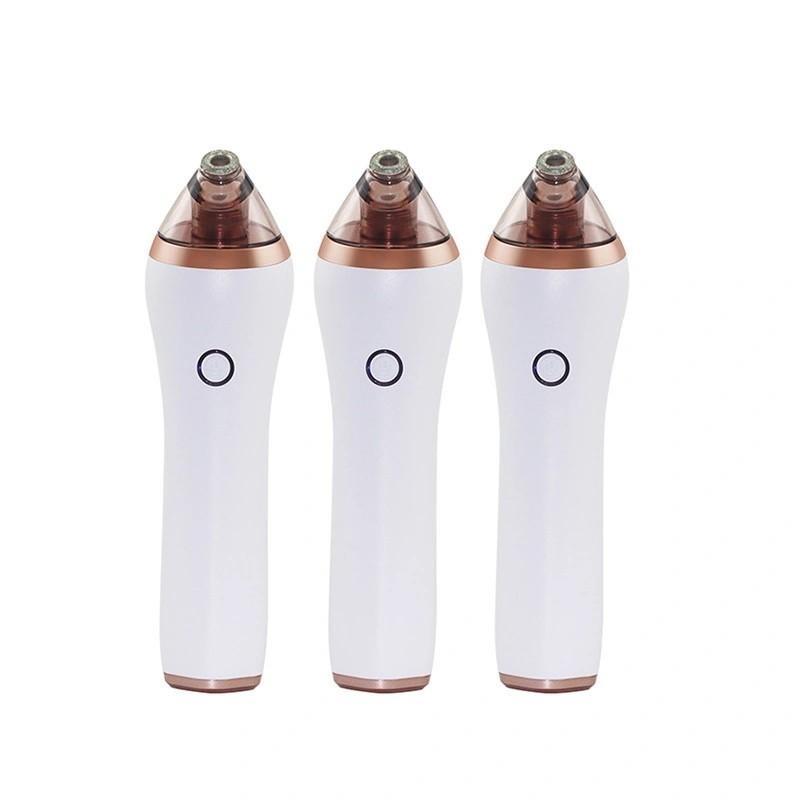
Press a small device to your nose, feel the gentle pull, and watch the gunk lift out of your pores. It feels like magic, but a vacuum blackhead remover is pure physics: controlled negative pressure doing what fingers and pore strips do clumsily. To understand why it works, and when it does not, you need to start inside the pore itself.
Anatomy of a Clogged Pore
Each pore is the opening of a hair follicle attached to a sebaceous gland that produces oil. When dead skin cells fail to shed properly, they mix with that oil and form a plug. If the plug stays covered by skin, it is a whitehead; if the pore stays open and the plug oxidizes in air, it darkens into a blackhead. Either way, the blockage sits like a cork a millimeter or two below the surface, held in place by friction against the pore walls and the stickiness of sebum. This is the target every vacuum blackhead remover is engineered to dislodge, and understanding the target explains every design choice that follows.
What Suction Does to the Plug
A vacuum blackhead remover creates a sealed chamber over the skin and evacuates air, dropping pressure inside the nozzle below atmospheric pressure. The higher outside pressure then pushes the plug outward along the path of least resistance: up and out of the pore. It is the same principle as a plunger on a drain. The key variables are suction strength, measured in kilopascals, and seal quality. Too little suction and the plug stays put; too much, or held too long in one spot, and capillaries near the surface rupture, leaving the red marks users complain about. Quality devices offer stepped suction levels, typically three to five, so you can match force to skin thickness: gentler on cheeks, firmer on the nose where skin is thicker and pores larger.
Why Heat and Steam Help First
Warmth softens sebum, lowering its viscosity so the plug slides out with less force. That is why the better devices pair suction with a hot compress mode, or why dermatologists recommend a warm shower first. A vacuum blackhead remover used on cold, dry skin needs far more suction to achieve the same result, which is exactly how bruising happens. Five minutes of warmth beforehand is the single biggest upgrade to your results, and it costs nothing.
The Interchangeable Heads, Explained
Those little suction cups are not decoration. A small round head concentrates suction on individual blackheads along the nose crease. A larger oval head covers cheeks and forehead for general decongestion. A microdermabrasion head adds gentle exfoliation while it vacuums, lifting the dead-cell layer that causes future clogs. Matching head size to the area keeps the seal tight, and a tight seal is what converts motor power into actual extraction instead of noisy air leaks. When a vacuum blackhead remover seems weak, the culprit is almost always a poor seal from the wrong head, not a weak motor.
Suction vs. Professional Extraction
An esthetician’s extraction facial uses the same physics with trained hands: steam, then manual or vacuum extraction, then calming masks. The home device compresses that sequence into one tool, which is why technique matters so much. Professionals adjust pressure instinctively by watching the skin blanch and rebound; home users must learn the equivalent discipline of keeping the device moving and starting low. A vacuum blackhead remover in practiced hands approaches professional results for surface congestion, though it cannot replicate the diagnosis, extractions of deep lesions, or skin analysis a trained facialist provides.
Used with the right technique, a modern vacuum blackhead remover clears in minutes what used to take a painful extraction facial. The physics has not changed in decades; what changed is that controlled, stepped suction finally made it safe to do at home.
When Suction Is Not the Answer
Deep cystic acne, inflamed pimples, and broken capillaries should never meet a vacuum device. Suction cannot reach below the dermis, and pulling on inflamed tissue spreads bacteria and worsens scarring. A vacuum blackhead remover is a maintenance tool for surface congestion, blackheads and sebaceous filaments, not a treatment for medical-grade acne. Knowing that boundary is what separates good skincare from a bad week, and honest manufacturers say so in their manuals.
From Spa Tool to Bathroom Drawer: A Short History
Vacuum extraction is not new. Dermatology clinics have used medical-grade suction devices for decades, and high-end spas offered vacuum facials long before home devices existed. What changed around the mid-2010s was miniaturization: lithium batteries, micro vacuum pumps, and cheap precision molding made it possible to shrink a clinical concept into a forty-dollar wand. The first home models were crude, single-speed and leaky, but each generation borrowed more from the professional playbook: stepped suction from clinical protocols, interchangeable heads from spa handpieces, thermal modes from the hot-towel-and-cold-finish facial sequence. Today’s vacuum blackhead remover is essentially a pocket esthetician, minus the diagnosis. That lineage is worth remembering when comparing devices: the ones that perform best are usually the ones that copied clinical design most faithfully, not the ones with the flashiest marketing.
The trajectory also explains the price spread. You are not paying for suction power, which physics caps cheaply, but for control: the stepped levels, the seal quality, the thermal modes that separate a thoughtful device from a motor in a tube. Understanding that helps you spend where it counts.