
5 Places a P25 Solar VMS Sign Makes the Difference
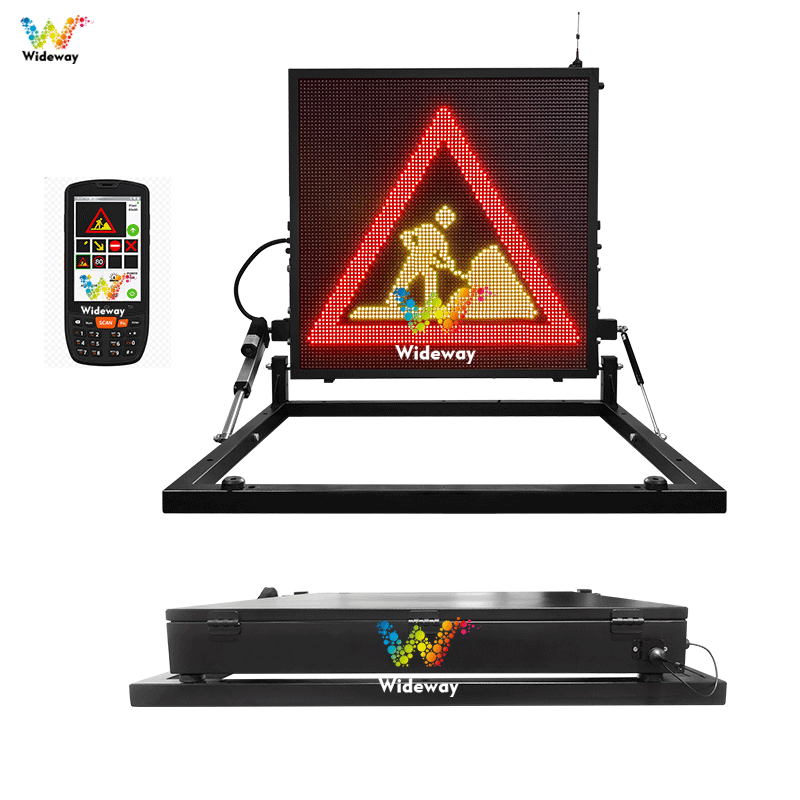
A message sign is only as useful as where you put it. The strength of solar mobile VMS is deployment flexibility: anywhere a hazard, bottleneck, or crowd appears, a sign can appear with it in hours. These five scenarios show where a P25 Solar VMS Sign earns its keep, far beyond the highway work zones most people picture.
1. Highway Work Zones
The classic use. Lane closures, speed reductions, and detour directions update as the work progresses, sometimes daily. Because the sign is solar and trailer-mounted, it repositions with the work front instead of requiring new power drops. Studies consistently show that advance warning signs reduce work-zone crashes, and dynamic messages outperform static ones because drivers actually read what changes. For contractors, the P25 Solar VMS Sign has become as standard as the cones themselves.
2. Incident and Emergency Management
When a crash, flood, or fire closes a road, responders need messaging up before the news helicopters arrive. A P25 Solar VMS Sign towed to the scene can display detours, warn of standing water, or direct evacuations within the hour, running for days on its batteries if the emergency outlasts the sunlight. Emergency managers value equipment that works when the grid does not, and solar autonomy means one less dependency during the chaos of incident response.
3. Events and Crowd Control
Stadiums, festivals, and marathons generate traffic patterns that exist for one weekend and never repeat. Mobile signs direct parking, warn of road closures, and display real-time updates as lots fill. Full-color graphics help here: a simple arrow and a parking symbol communicate faster to a tired driver than three lines of text. Event organizers rent rather than buy for these peaks, and the rental market for solar VMS trailers has grown into a substantial business on its own.
4. School Zones and Speed Awareness
Smaller deployments use VMS trailers as speed feedback signs near schools and residential streets, flashing the driver’s actual speed against the limit. The psychological effect is well documented: drivers slow down when their speed is displayed publicly. Solar power makes these semi-permanent installations practical without wiring costs, and the trailer moves to the next complaint hotspot when behavior improves. It is traffic calming without concrete, and residents love seeing the data-driven response.
5. Border Crossings and Toll Plazas
Wherever queues form unpredictably, from border checkpoints to ferry terminals, a P25 Solar VMS Sign gives operators a voice: wait times, lane assignments, document reminders. Messages update as conditions change, which static signage cannot do. For agencies managing flow rather than just warning of danger, that adaptability is the entire value proposition.
Beyond the Five: Specialized Uses
The same platform serves amber alerts, weather warnings for fog and ice, parking guidance at airports, and even public information during power outages, when grid-tied signs go dark but solar units keep running. Each new use case reinforces the core advantage: a P25 Solar VMS Sign goes where the need is, says what the moment requires, and asks for nothing but sunlight in return.
One Platform, Many Jobs
The common thread is impermanence: every one of these needs is temporary, mobile, or remote, exactly where fixed infrastructure makes no sense. That is why the solar mobile VMS category keeps growing while traditional sign budgets shrink.
How Operators Actually Use Them Day to Day
The daily reality is less dramatic than the brochure. A traffic management center operator monitors a dashboard of deployed signs, each reporting battery voltage, GPS position, and current message. Morning brings the routine: push the day’s work-zone messages, confirm receipt, check overnight battery levels. Midday brings the exceptions: an incident closes a lane, and within minutes a detour message goes out to the nearest units. The P25 Solar VMS Sign fleet becomes an extension of the operator’s voice across the network. The best-run agencies pre-build message libraries for recurring scenarios, so incident response is selecting a template, not composing under pressure, which is where speed actually comes from.
Renting vs. Buying: The Fleet Decision
Agencies and contractors face a classic make-or-buy choice. Buying suits organizations with constant deployment needs: highway authorities running year-round work programs amortize a P25 Solar VMS Sign over hundreds of deployments. Renting suits episodic needs: event organizers, emergency managers, and contractors on short projects pay by the week and return the unit. The rental market has matured to offer full service, delivery, setup, and message programming, so even buyers sometimes rent for surge capacity. The decision framework is simple: if utilization exceeds roughly half the year, buy; below that, rent and let the rental company carry the maintenance burden.
Whatever the scenario, the deployment pattern stays the same: tow it in, raise the mast, program the message, and let the P25 Solar VMS Sign do the talking while the crew focuses on the actual work.