
Why Consistent Feed Preparation Matters in Plastic Granulation
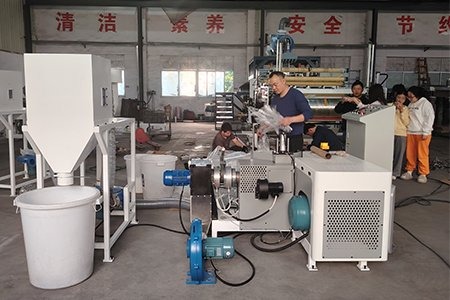
Plastic recycling is often discussed in terms of processing capacity, energy consumption, and the value of recovered materials. However, one factor that can influence the entire granulation process begins before material reaches the processing zone: feed preparation.
Recycled plastics rarely arrive in a perfectly uniform condition. A recycling operation may handle production scrap, rejected molded parts, used containers, runners, or other rigid plastic waste. These materials can differ in size, shape, wall thickness, contamination level, and polymer composition. If these differences are not managed properly, they can create unnecessary fluctuations during size reduction and subsequent processing.
For recycling businesses, understanding the relationship between feed preparation and granulation is an important step toward building a more predictable production process.
Why Recycled Plastic Feedstock Is Difficult to Standardize
Unlike virgin resin supplied in relatively consistent forms, recovered plastic materials often reflect the conditions under which they were collected or generated. Even waste from the same manufacturing facility may contain pieces with different dimensions and shapes.
For example, thick-walled molded components behave differently from thin runners or small production offcuts. Bulky pieces may require preliminary size reduction, while irregular fragments can affect how material moves through a feeding system. Residual labels, metal pieces, dirt, or incompatible polymers may also create problems if they are not removed before processing.
These variations matter because granulation equipment operates most predictably when the incoming material falls within its intended operating range.
A practical recycling workflow therefore starts with material identification and sorting. Operators should understand which polymers are being processed, remove unsuitable contaminants, and separate material streams when necessary. This preparation helps reduce avoidable interruptions and makes the equipment easier to operate consistently.
The Connection Between Particle Size and Equipment Performance
Particle size is not simply a matter of appearance. It can influence feeding behavior, cutting conditions, and the stability of the overall process.
Large or awkwardly shaped pieces may enter a machine unevenly. If the material supply fluctuates significantly, the processing load can also vary. Depending on the equipment configuration and the properties of the plastic, this may affect throughput, energy use, and the consistency of the output.
Pre-cutting or shredding can help prepare bulky waste for downstream processing. However, the appropriate size depends on the material, the machine design, and the intended production route. Making every particle as small as possible is not necessarily the most economical approach.
The objective is to prepare material to a suitable and reasonably consistent size without adding unnecessary processing steps.
Before choosing a granulation system, recycling operators should evaluate the dimensions of their incoming waste, the required output size, and whether preliminary reduction equipment is needed. These details help determine a practical configuration rather than relying on nominal capacity alone.
Matching the Granulator to the Material
Different plastics place different demands on processing equipment. Rigid plastics, for instance, may include thick sections, molded parts, and production rejects with varying geometries. Their processing requirements can differ from those of flexible films or soft packaging waste.
A suitable plastic recycling granulator should therefore be selected according to the actual material stream rather than the general label of “plastic waste.”
Several factors deserve attention during equipment evaluation:
- Material type: Identify the polymers being processed and determine whether they can be handled within the same production stream.
- Feed dimensions: Consider the largest pieces, their thickness, and whether preliminary size reduction is necessary.
- Required output: Define the target particle size and the intended use of the recovered material.
- Operating capacity: Evaluate realistic processing requirements instead of assuming that the highest advertised capacity will suit every material.
- Maintenance access: Check whether cutting components and other serviceable parts can be inspected and maintained conveniently.
A machine that performs well with one type of waste may not deliver the same results with another. Matching the equipment to the feedstock is therefore a more reliable starting point than comparing specifications in isolation.
Why Feeding Stability Deserves More Attention
A granulator’s performance depends not only on its cutting mechanism but also on how material enters the processing area. Irregular feeding can produce uneven loading, while excessive feeding may increase the risk of blockages or interruptions.
Operators should establish a feeding method appropriate to the material’s size, shape, and volume. Consistent material supply can help the machine operate within a more stable working range. It also makes it easier to identify whether a performance problem originates from the feedstock, the equipment, or operating conditions.
When production fluctuates, increasing the feed rate is not always the best response. It may be more useful to examine whether material is bridging at the inlet, whether oversized pieces are entering the machine, or whether the upstream preparation process is supplying material unevenly.
These checks are particularly relevant when a recycling line handles changing batches of production scrap. A repeatable feeding procedure gives operators a clearer basis for adjusting the process and comparing results between batches.
Cutting Condition and Routine Maintenance
Cutting components are exposed to repeated mechanical stress during granulation. Their condition can influence the way material is processed, so routine inspection is an important part of production management.
Dull or damaged blades may reduce cutting effectiveness and increase the load required to process certain materials. Foreign objects can cause more serious damage, which is why sorting and contamination control should not be treated as separate from equipment maintenance.
A practical maintenance routine should follow the manufacturer’s recommendations and the actual operating conditions. Inspections may include blade condition, fastening points, drive components, safety devices, and signs of abnormal vibration or noise.
Operators should also record recurring problems. If a particular material batch repeatedly causes blockages or unusual wear, the issue may involve feed preparation or contamination rather than the granulator alone.
Useful records do not need to be complicated. Tracking material type, operating hours, maintenance activities, and interruptions can help a recycling facility identify patterns over time. This information supports better maintenance planning and more informed decisions about process improvements.
Managing Changes Between Material Batches
Some recycling facilities process relatively consistent production scrap, while others handle several grades or sources of plastic. In the latter case, changes between batches can create additional operational challenges.
A clear procedure for changing materials helps reduce the risk of mixing incompatible plastics or carrying contamination from one batch into another. The procedure may include checking the material identity, inspecting the feed area, removing residual material when required, and confirming the settings appropriate to the next batch.
The exact steps depend on the machine design and the properties of the plastics involved. Materials should not be mixed solely because they can physically pass through the same equipment. Their compatibility with the intended recycling process and final application must also be considered.
For facilities seeking greater process consistency, batch identification and basic production records can be as valuable as equipment upgrades. They help connect the quality of incoming waste with the performance observed during processing.
Evaluating the Entire Recycling Process
Selecting granulation equipment should be part of a broader review of the recycling workflow. A machine’s nominal capacity is only one consideration. Material preparation, feeding arrangements, output requirements, operator procedures, maintenance, and downstream handling all contribute to practical production performance.
Before investing in new equipment, a facility can begin by documenting its current material streams and identifying recurring bottlenecks. Is the incoming waste too bulky? Does the feed vary significantly between batches? Are interruptions associated with contamination, inconsistent feeding, or maintenance? Does the output meet the requirements of the next processing stage?
Answering these questions helps turn a general equipment purchase into a more focused process improvement project.
It is also important to distinguish between the granulator’s function and the rest of the recycling line. Size reduction alone does not guarantee that recovered plastic is clean, compatible, or ready for reuse. Washing, separation, drying, extrusion, and pelletizing may be required depending on the material and the intended application.
A well-planned system considers these stages together instead of expecting a single machine to solve every recycling challenge.
Conclusion
Reliable plastic granulation begins with a clear understanding of the material being processed. Feed preparation, particle size, feeding stability, cutting condition, and batch management can all influence how consistently a recycling operation performs.
By evaluating these factors before selecting equipment, manufacturers and recycling businesses can make more informed decisions about machine configuration and operating procedures. The goal is not simply to process more material, but to create a workflow that is appropriate for the feedstock, manageable for operators, and consistent with the requirements of the recovered plastic’s next use.