
How pillow plate laser welding Builds Strong, Leak-Tight Heat Exchangers
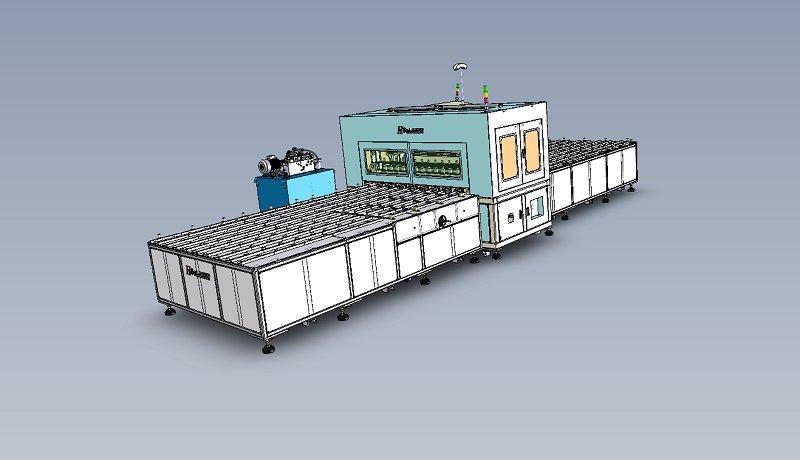
A pillow plate is a pair of metal sheets welded together in a pattern, then inflated to form a quilted panel that carries fluid. It is used in heat exchangers, tanks and cooling panels, and the welds that hold it together have to be strong and completely leak-tight. That is the job pillow plate laser welding is built for.
Instead of stitching plates together by hand, a laser welding system lays down precise weld lines across the sheets, following a programmed pattern. The pillow plate laser welding process is fast, repeatable and consistent, which is exactly what a heat exchanger needs, since a single failed weld can ruin a whole panel.
What a pillow plate actually is
Two thin sheets of stainless steel are laid on top of each other and welded along a planned pattern of lines and spots. The edges are sealed, and then fluid is pumped between the sheets at pressure. The unwelded areas bulge out into a pillow shape, which gives the plate its name and creates channels for the fluid to flow through.
The shape is not decorative. The bulging surface increases the area in contact with the fluid and creates turbulence, which helps heat move between the fluid inside and whatever is on the outside. That makes pillow plates useful in tanks, food processing and industrial cooling, where efficient heat transfer matters.
Why a laser suits this job
Laser welding works well here because the welds need to be narrow, neat and evenly spaced. A laser beam can be moved quickly and accurately across a large plate, laying down weld lines with very little heat spreading into the surrounding metal. That keeps the sheets flat and avoids distortion that would weaken the panel.
Speed matters too. A pillow plate can be over a metre wide and several metres long, with a long pattern of welds to complete. A laser system with a working area of 1500 by 3000 millimetres or more can cover a full plate, and automated feeding moves the next sheet into place without stopping the line for long.
The automation behind the weld
Modern systems are more than a laser on a table. The machine described by the maker uses a six-axis robot for gasketing and welding, with automatic sheet feeding so plates move through without manual handling. Laser power is typically 2000 or 3000 watts, which is enough to weld the sheet thicknesses used in these panels quickly and cleanly.
Automation also keeps the weld pattern consistent from one plate to the next. A human welder could not hold the same spacing and speed across hundreds of metres of weld line, but a programmed system can. That consistency is what makes the finished panel reliable: every weld is the same as the last one.
- A six-axis robot follows the programmed weld pattern
- Automatic feeding moves sheets through without long stops
- Laser power of 2000 or 3000 watts suits the sheet sizes used
- A large working area covers full plates in one setup
Where the finished plates end up
Pillow plates show up in places you might not expect. They line the walls of process tanks, form the panels of plate heat exchangers, and cool equipment in food and drink factories. Anywhere a fluid needs to be heated or cooled evenly across a large surface, a pillow plate is a practical answer.
The quality of the weld on a pillow plate laser welding decides how long the plate lasts. A clean, even laser weld resists corrosion and pressure, while a poor weld becomes the weak point of the whole panel. That is why the welding method matters as much as the design of the plate itself: the best pattern in the world is useless if the welds do not hold.
Checking the welds before the plates leave the factory
A finished pillow plate needs to be checked before it is fitted into a system. The welds are inspected for consistency, and the plate is usually pressure-tested to confirm it is leak-tight. A plate that passes this test can be trusted in service; one that has not been tested is a risk, however good it looks.
This is another reason the welding method matters. A consistent, automated weld pattern makes testing straightforward, because every weld is the same and any fault stands out. A buyer choosing a supplier should ask how the plates are tested and what the test covers. A clear answer on testing is a good sign that the maker takes quality seriously.
The process takes a simple idea — two sheets, a pattern of welds, and pressure — and turns it into a reliable industrial product. The laser gives the welds the precision and consistency the job demands, and automation makes it possible to produce large plates at a practical speed. The result is a heat exchanger panel that is strong, leak-tight and built to last.