
Building a SaaS Product Without a Technical Co-Founder
If there is one thing that keeps non-technical founders stuck at the idea stage longer than anything else, it is the belief that they cannot build a real software product without a technical co-founder or a development team. This belief is so widespread that it has become a kind of received wisdom in startup circles, repeated so often that founders accept it without questioning whether it is actually still true.
It is not true anymore. Or at least, it is much less true than it was five years ago. The tools available to non-technical founders today have changed the practical meaning of what one person can build without writing a line of code. The question is not whether you can build a SaaS product without technical skills. The question is whether you understand your customer well enough to build the right one.
What You Actually Need Technical Skills For
It is worth being specific about what technical skills actually provide. At the core, they provide the ability to translate a product vision into working software. They also provide the ability to make informed decisions about architecture, to debug when things break, and to understand the technical constraints that shape what is and is not possible to build.
Of those four things, the modern no-code ecosystem handles the first reasonably well for a large category of SaaS products. The others are more nuanced. But for a non-technical founder building an early-stage product to validate a market, the first one is the most critical. And it is the one that dedicated platforms are increasingly good at providing.
The Market You Understand Is the Market You Should Serve
Non-technical founders almost always have a domain expertise advantage that technical co-founders would not bring. The founder who spent eight years in logistics understands the daily operational frustrations of logistics managers better than a developer who has never worked in the industry. The founder who built a career in healthcare administration understands compliance workflows and clinical pain points that most software engineers would need years to learn.
That domain understanding is worth a great deal. It means you know which problems actually matter, which features would actually get used, and what language your potential customers use to describe their own situation. These are the inputs that make a product good. The technical execution layer, important as it is, is downstream of getting those inputs right.
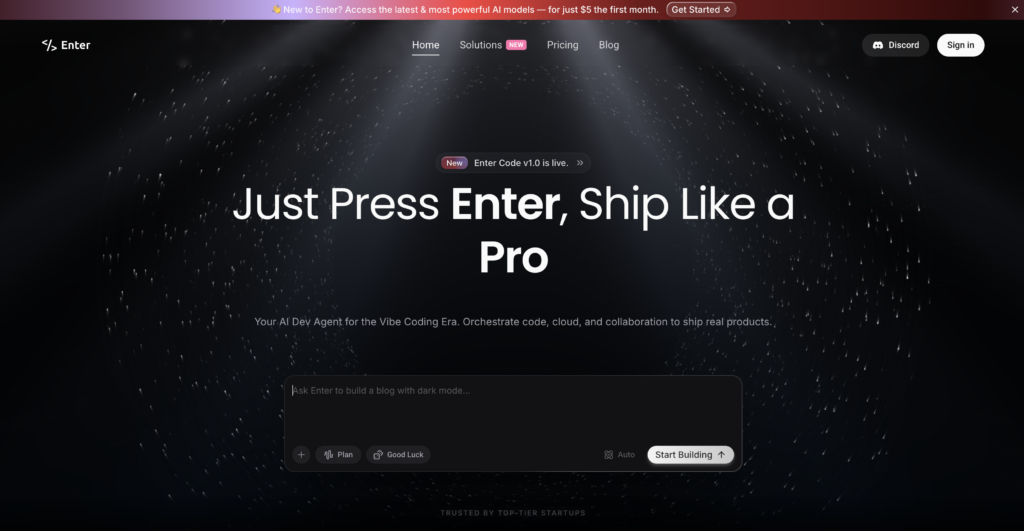
Platforms like Enter Pro let non-technical founders put their domain expertise to work directly. Instead of trying to communicate your understanding of the problem to a developer and hoping the translation holds, you can build the product yourself based on that understanding. The result is often more accurate to the actual customer need precisely because there is no translation layer.
Starting With the Right Product Scope
The biggest trap for non-technical founders building their first SaaS product is trying to build too much too quickly. Because the tools are accessible, it is tempting to keep adding features until the product looks comprehensive enough to show investors or charge for. Resist this.
The first version of your product should solve one specific problem for one specific type of customer. Not a general problem for a general customer. A specific, painful, recurring problem for a customer you can describe in detail. The more precisely you can define that, the better your early product decisions will be.
Using an AI app builder helps here because it prompts you to think through user flows and product logic in a structured way. When you are building something for the first time, having that structure imposed externally is genuinely useful. It forces you to make decisions you would otherwise defer, and those decisions are often the ones that determine whether the product is clear enough for a new user to understand without help.
Getting to Your First Paying Customer
For a non-technical founder, the fastest path to a first paying customer is not building the most complete product. It is building the most useful sliver of a product and finding the people who have been living with the problem that sliver addresses.
Because you have domain expertise, you probably already know some of these people. Former colleagues, industry connections, people in professional communities you are part of. These are your first prospects. Not because they are obligated to support you, but because they have the problem, you understand it, and you can have a direct conversation about whether what you have built actually helps.
The feedback from those first conversations and those first paying customers is what drives everything forward. It tells you what to build next, how to price it, and who else to go after. That process does not require a technical co-founder. It requires a product good enough to generate real feedback, and the willingness to act on what you hear.
Conclusion
There will come a point in most SaaS businesses where the no-code tools hit their limits. Custom integrations, complex data processing, performance at scale. These are real challenges that eventually require real technical expertise. The question is when, not whether.
The right answer for most non-technical founders is: later than you think. Get to paying customers first. Get to a clear picture of what the product needs to become. Then bring in technical resources with a much clearer brief about what needs to be built and why. That sequence is almost always better than hiring technical help early and spending months and money building things that turn out to be wrong.
The non-technical SaaS founder who ships early, learns fast, and brings in technical expertise at the right moment is in a better position than the one who waited two years to start building because they could not find the right co-founder. Start with what you have. Build from there.
It is also worth addressing the perception question directly. Some non-technical founders worry that building with no-code tools sends a negative signal to technical co-founders or developers they might want to hire later. In practice, the opposite tends to be true. A founder who has shipped a working product, acquired early customers, and generated data about what to build next is a far more attractive partner for a senior technical hire than one who has been waiting for the right technical person before starting anything.