
Outdoor Furniture That Survives Real Weather, Not Just Showrooms
Most outdoor furniture looks wonderful on the day it arrives. Six months later, the story is usually different: cushions sag after a rainy week, frames develop a chalky haze, and a table that felt sturdy begins to wobble on the patio stones. The gap between a showroom impression and a second summer in the backyard is the entire challenge of buying pieces that live outside.
Weathering is not a defect to avoid; it is a condition to design around. Sun, rain, salt air, and temperature swings act on outdoor furniture constantly, and the materials that handle them well are rarely the cheapest ones. This guide focuses on what holds up, how to place pieces so they last, and what small maintenance habits make the biggest difference year after year.
Understand the Three Enemies: Sun, Water, and Time
Every outdoor material fails in a pattern, and knowing the pattern helps you predict how a specific piece will age. Ultraviolet light breaks down polymers, dyes, and finishes, leaving colors faded and surfaces brittle. Water gets into seams and joints, expands when it freezes, and feeds mold in anything that stays damp. Time simply amplifies both, which is why cheap construction rarely survives more than a couple of seasons.
The best outdoor furniture is engineered around these pressures rather than decorated to hide them. Frames are chosen for stability in heat and cold, fabrics for colorfastness and quick drying, and finishes for adhesion under repeated wetting. When you evaluate a set, ask which of the three enemies the design is actively resisting, not just whether it looks good on a sunny afternoon.
How UV Degrades Different Materials
Plastic resin furniture can become brittle and chalky under prolonged sun exposure unless it is formulated with UV stabilizers. Wicker made from natural fibers dries out and cracks; synthetic wicker made from high-density polyethylene holds color far longer. Wood finishes fail from the top down as the sun breaks the coating, which is why horizontal surfaces such as table tops and armrests fade first.
Where Water Does the Most Damage
Water rarely destroys a material on contact; it destroys the details. It collects in hidden channels, pools on flat surfaces that lack drainage, and wicks into cushions through unsealed seams. Metal joints trap moisture, and fasteners that are not corrosion-resistant begin to rust from the inside. The design details that shed water, such as sloped seats, weep holes, and raised glides, matter more than the thickness of a frame.
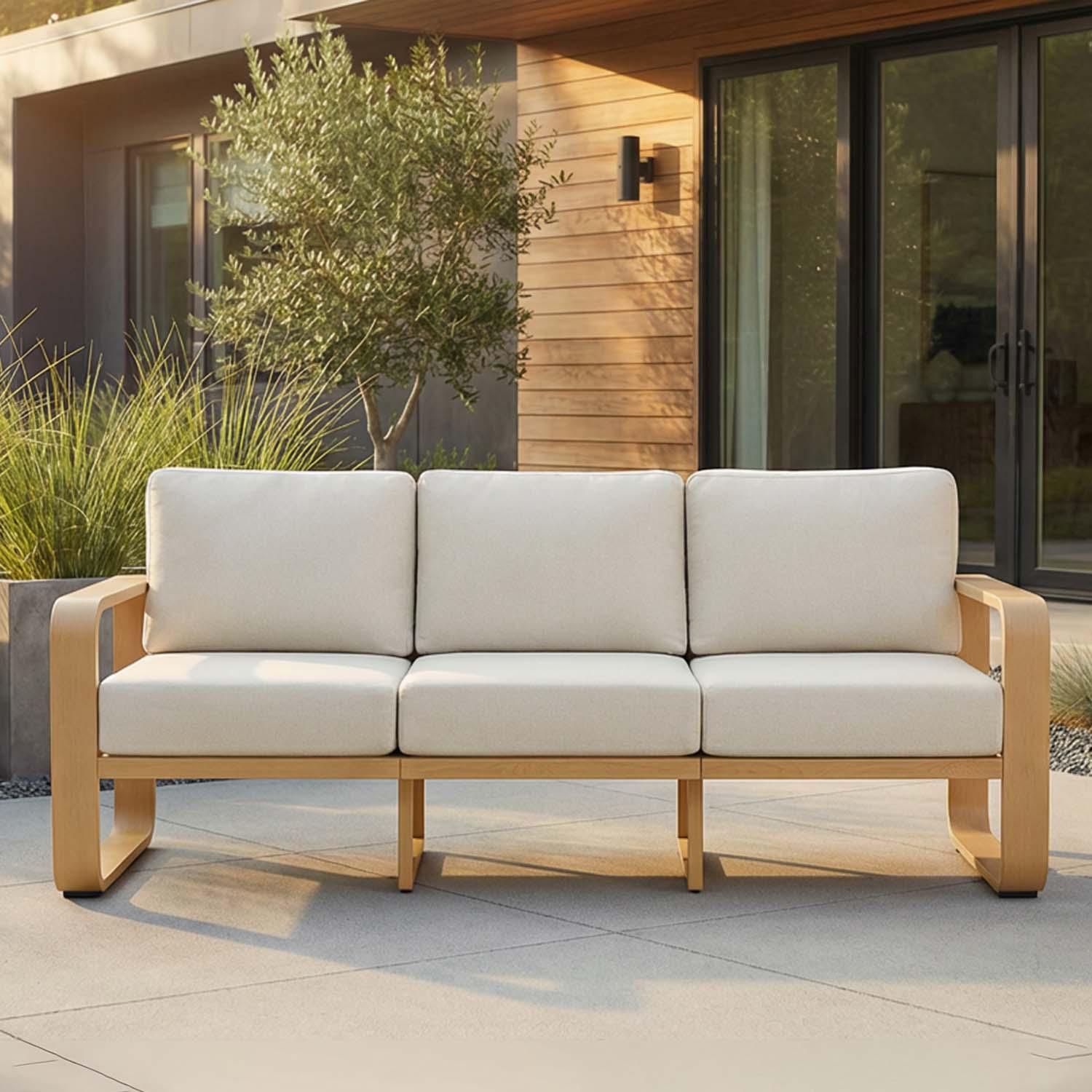
Frame Materials Ranked by Real-World Performance
Powder-coated aluminum is the standard for lasting outdoor frames. It is light enough to move, does not rust, and the coating resists chipping when the piece is handled carefully. Stainless steel is exceptionally strong and corrosion-resistant, though heavier and more expensive. Teak and other dense woods contain natural oils that resist rot, and they can be left to silver gracefully or refinished periodically.
Steel that is merely painted is a risky choice in wet climates unless it is properly galvanized and coated, because a single chip can start a rust line. Cheap resin frames are fine for light, occasional use but can become brittle in extreme heat or cold. Whatever the material, check the welds and connectors. Smooth, continuous welds resist moisture better than spotty ones, and stainless hardware outlasts standard screws by a wide margin.
Weight, Portability, and the Trade-Off Nobody Mentions
Heavier frames tend to feel more stable in wind, but they are also harder to move for cleaning, rearranging, or storing over winter. Before you commit to a set, imagine carrying each piece across the patio on your own. If a chair requires two people to shift it, you will probably stop moving it altogether, and the layout will be decided by convenience rather than design. Glides or shallow casters can solve this without compromising stability, especially on smooth paving.
Hardware and Joints: The Hidden Failure Points
Most outdoor furniture does not collapse because the frame is too thin; it fails at the connections. Bolts that thread directly into soft metal strip their threads after a few seasons of expansion and contraction. Look for through-bolts, captured nuts, or threaded inserts, which hold far better under repeated stress. On folding pieces, check the pivot points for play and look for plastic bushings that prevent metal rubbing against metal. These small components are inexpensive to replace if they wear, but only if they were designed to be serviced in the first place.
Cushions, Fabrics, and the Case for Quick-Drying Foam
Cushions are where outdoor furniture most often disappoints. Standard foam soaks up water like a sponge and can take days to dry, which invites mildew and permanently flattens the seat. Quick-drying foam uses open cells that let water drain and air circulate, so a rain shower does not ruin an afternoon. Look for cushion covers with removable, washable shells and zippers that are protected from water intrusion.
Fabric performance is usually described by a colorfastness rating against light and water. Solution-dyed acrylic fabrics hold color especially well because the pigment runs through the fiber rather than sitting on the surface. Tight plain weaves resist snagging and dry faster than loose, textured weaves, though texture hides stains better. If cushions stay outside year-round, consider storage bags for the wettest months rather than relying on fabric alone.
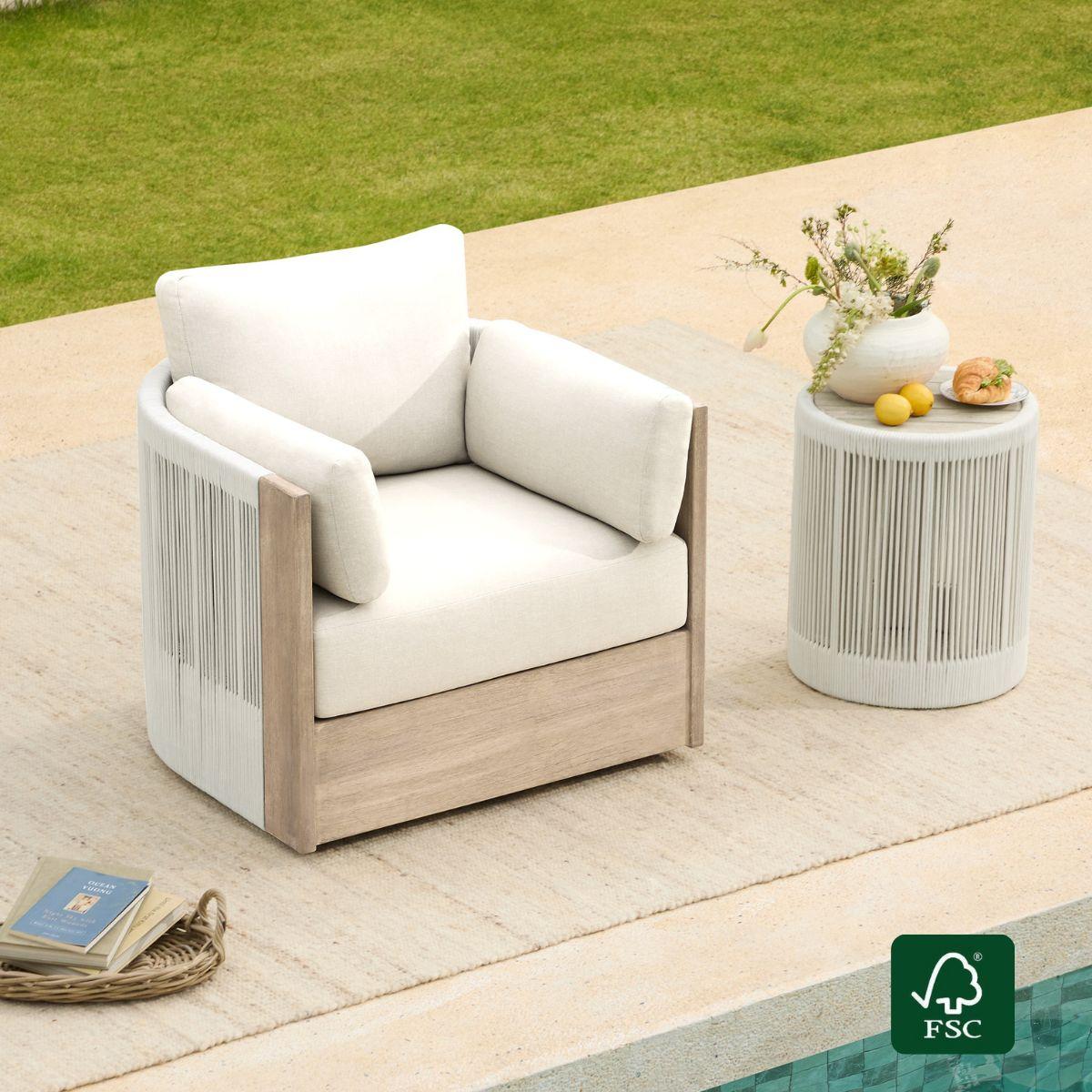
Planning a Patio That Works, Not Just Looks Good
Placement is a form of protection. Furniture that sits in constant direct sun ages faster than pieces under a pergola or shade sail, and pieces near sprinklers collect mineral deposits and stay damp. Think about prevailing wind and rain direction as well: a sofa against a wall that catches runoff will suffer more than one placed a few feet away with proper drainage beneath it.
Arrange seating around a focal point and leave generous walking space between groups. Outdoor rooms feel larger and calmer when pieces are not jammed together, and airflow between furniture helps cushions dry. Use a rug to define the conversation area and to soften hard paving, but choose one rated for outdoor use so it does not trap water. Keep dining areas close to the kitchen door, and lounge areas farther out where the view is best.
Scale the Set to the Surface Beneath It
A large sofa on a small deck looks like a delivery waiting to be moved, and a compact bistro set on a sprawling terrace feels lost. Sketch the patio on paper and place the furniture in scale before ordering anything. Leave at least two feet of clearance around the dining table for chairs to pull out, and keep a buffer between lounge seating and the edge of any step or drop. On sloped or uneven surfaces, favor pieces with adjustable glides so the set sits level without wobbling.
Shade, Wind, and Shelter
The best outdoor rooms offer a choice of conditions. A covered corner for hot afternoons, a sunny spot for cool mornings, and a sheltered seat away from gusty wind make a patio usable across more of the year. Furniture placement should support that range rather than clustering everything under a single umbrella. Lightweight cushions and small side tables let people adapt their spot as the sun moves, which is far more effective than trying to find one perfect position for the whole season.
Seasonal Care That Doubles the Lifespan
Maintenance for outdoor furniture is mostly about removing the conditions that cause damage. Wipe frames and table tops periodically with mild soap and water to remove pollen and pollution that trap moisture. Rinse cushions and let them dry fully in the sun before putting them back. Tighten fasteners at the start of each season, since temperature changes loosen connections over time.
Cover furniture only when it is completely dry, otherwise a cover traps moisture and makes the problem worse. In climates with hard winters, move lightweight pieces into storage and leave heavy ones in place under breathable covers. Apply a fresh coat of sealant or oil to wood as recommended by the manufacturer, and touch up any chips in powder coating before rust can start. Brands such as CHITA LIVING build outdoor pieces with these habits in mind, using materials and finishes that reward a little attention with several extra years of service.
Cushions deserve their own routine. Vacuum them with a soft brush attachment before dirt works into the weave, and spot clean spills promptly rather than waiting for a full wash. When you do wash removable covers, follow the care label and let them air dry in the shade; direct sun can fade colors that took a season to earn. Store cushions indoors during long stretches of wet weather, and bring them in overnight when heavy rain is forecast. These small steps cost minutes and prevent the sagging, staining, and mildew that shorten a cushion’s life most.
Metal frames need attention at the points where finishes are most vulnerable: the feet, the welds, and any place a chair scrapes the ground. Add protective caps or glides if the originals wear through, and repaint small chips before they spread. For wood, a yearly application of the recommended oil keeps the surface from drying and cracking, especially in climates with low humidity. None of this is difficult, but it does need to happen on a schedule rather than only when the damage becomes visible.
Furniture Built for the Long Summer
Outdoor furniture is an investment in time spent outside, and it deserves to be chosen with the same seriousness as anything indoors. The pieces that last are not the flashiest ones on display; they are the ones whose frames resist rust, whose cushions dry quickly, and whose design details shed water instead of holding it.
Look past the first impression and ask how each piece will behave after a season of sun and rain. Place furniture thoughtfully, care for it consistently, and the patio becomes a room you actually use rather than a collection of items slowly deteriorating in the weather.