
Portable Laser Welding Machines: How They Work and Where They Shine
Light, Metal, Melt: The Thirty-Second Version
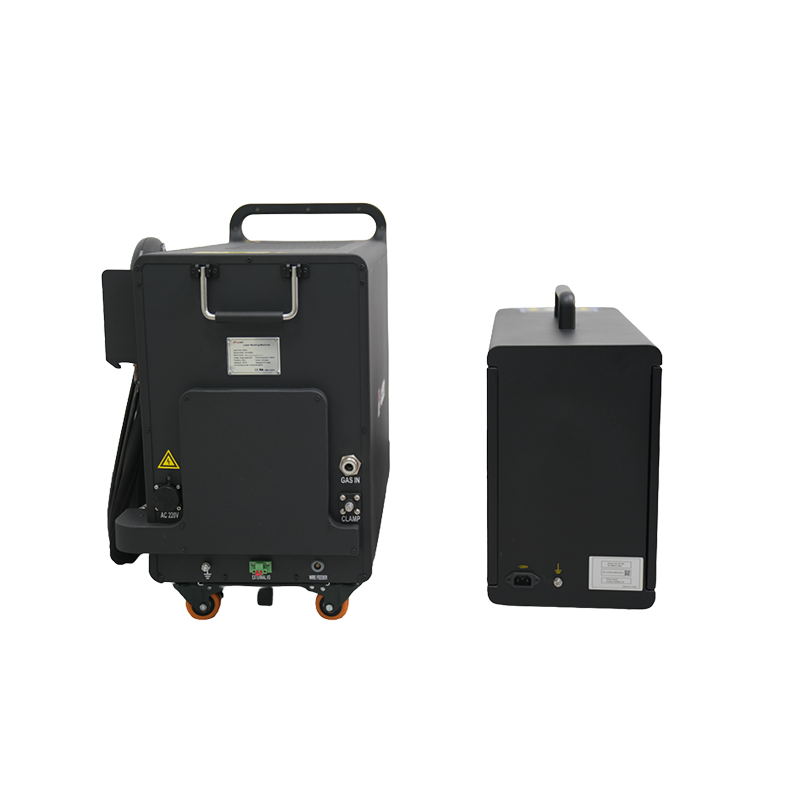
Strip away the enclosure and a laser welder is embarrassingly simple in concept: a focused beam of light so intense it melts metal on contact, steered by a human hand. The fiber laser inside generates light, optics squeeze it into a spot fractions of a millimeter wide, and where that spot touches steel or aluminum, the metal liquefies instantly and fuses as the beam moves on. A portable laser welding machine puts this physics into a unit the size of a small suitcase, with the beam delivered through a flexible fiber to a handheld gun. Pull the trigger, guide the gun along the joint, and wire feed — built into most guns — fills the seam. That combination — extreme heat in a tiny zone, delivered by a portable laser welding machine — is what makes the process so controllable. No arc to strike, no electrode to change, no years of practice to lay a decent bead.
Why Putting It in Your Hand Matters
Traditional laser welders are magnificent and immobile: gantry-mounted, enclosed in safety cells, fed by robots. They belong to factories with volume. The handheld format exists for everything else — the repair shop, the fabrication bay, the job site. A portable laser welding machine goes to the work instead of the work coming to it: railings already installed, a cracked bracket on a food-processing line, a stainless tank too big for any enclosure. Setup is minutes, not a fixturing project. That mobility is also an economic argument — one portable laser welding machine can serve welding, cleaning (with the right head), and cutting across a whole shop, replacing trips to three different stations.
Where It Beats the Old Tools
Against TIG, the comparison is speed and heat. A portable laser welding machine typically welds several times faster than TIG on thin materials, and because the heat input is so concentrated, the surrounding metal barely warms — which means less distortion, less discoloration on stainless, and often no post-weld cleanup at all. Against MIG, the edge is precision and finish: laser beads are narrow and clean where MIG sprays spatter that someone must grind off. Shops that switch report that a portable laser welding machine cuts total job time by half or more on typical sheet-metal work. The honest caveat is fit-up — laser welding forgives gaps poorly, so joints need to fit tightly, and very thick sections still belong to arc processes. But for sheet metal, tubing, and cosmetic stainless work, a portable laser welding machine wins on total job time once you count the finishing labor the old methods demand.
A concrete example helps: a small shop welding stainless countertops used to TIG every seam, then spend nearly as long grinding and polishing the heat discoloration away. After switching, the seams came out clean enough that polishing time dropped to minutes per piece. The weld itself was faster, but the real saving was everything after the weld — the labor nobody puts in the quote but everybody pays.
What Welds Well (and What Fights Back)
Carbon steel, stainless steel, and aluminum are the bread and butter — aluminum wants a bit more power and attention to reflectivity, but it welds fine. Galvanized steel works with ventilation for the zinc fumes. Copper and brass, being highly reflective, need higher power and realistic expectations. Dissimilar metals are possible within limits that the machine’s settings and a knowledgeable operator define. One practical note: every portable laser welding machine ships with parameter presets, and the difference between a frustrating first week and a smooth one is usually an afternoon spent running test coupons instead of production parts. This is also why training on a portable laser welding machine focuses so much on joint preparation. The presets get you close; your material and joint get you the rest of the way.
Who’s Actually Buying These
The buyer list tells the story better than any spec sheet. Custom fabrication shops use them for stainless architectural work where finish quality is the product. Auto repair and restoration shops weld thin panels without warping them. Kitchen equipment manufacturers, signage makers, and HVAC contractors all show up in the order books — anywhere thin metal meets a deadline.
The current generation of portable laser welding machineportable laser welding machine designs has pushed prices into territory where a mid-size shop can justify one on labor savings alone, and the learning curve is genuinely short: most operators produce acceptable welds within days, not months. If your shop’s bottleneck is the skilled TIG welder everyone queues behind, that’s the signal.
No tool replaces all others, and the laser won’t retire your MIG spool gun. But the direction is clear: as prices fall and power climbs, the portable laser welding machine is moving from novelty to standard shop equipment — the thing apprentices learn alongside the angle grinder. The shops thriving with a portable laser welding machine are the ones that matched the tool to the work instead of forcing every job through it. For thin-metal work where speed and finish matter, it’s already the rational choice.