
What Graphite Actually Is
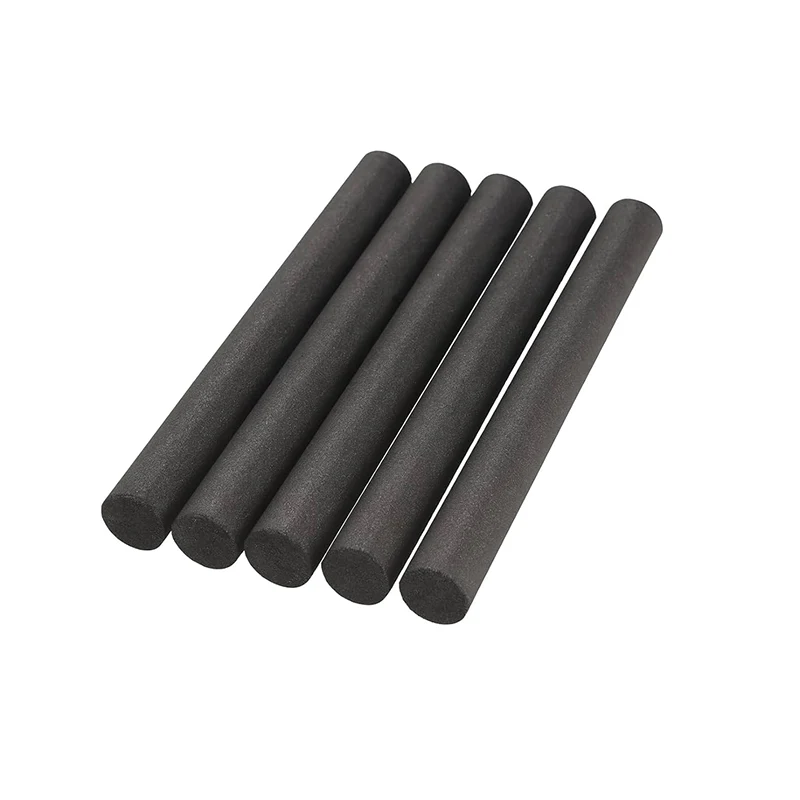
Graphite is one of the two crystalline forms of carbon, the other being diamond. The two couldn’t be more different in character. Diamond is the hardest natural material on earth. Graphite is soft, slippery, and dark. The difference comes down to molecular structure. In diamond, carbon atoms are arranged in a rigid three-dimensional lattice. In graphite, they form flat hexagonal sheets that slide over one another easily. Those sheets are what give graphite its lubricity, and the delocalized electrons within them are what make it an excellent conductor of electricity.
Graphite does not occur naturally in the purity and consistency required for industrial applications. Instead, it is manufactured from petroleum coke and pitch, blended, shaped, and then baked at temperatures exceeding 2,500 degrees Celsius. This process, called graphitization, drives off volatile compounds and rearranges the carbon atoms into the crystalline structure that gives the material its useful properties.
Why Graphite Rods Are Made
Graphite rods are produced in a range of diameters, lengths, and grades, each tailored to a specific application. The manufacturing process allows for tight control over density, porosity, and grain size, which in turn affect the rod’s electrical conductivity, thermal conductivity, mechanical strength, and resistance to oxidation.
The properties that make graphite rods valuable are unusual in combination. Most materials that conduct electricity well are also good conductors of heat, and graphite is no exception. But graphite remains stable at temperatures where metals would melt or oxidize. It resists thermal shock, meaning it can go from room temperature to thousands of degrees without cracking. And it resists attack by most acids and alkalis. Few materials combine these traits.
The Applications That Depend on Them
Graphite rods appear in a surprising range of industries and processes. In steelmaking, they serve as electrodes in electric arc furnaces, where they carry enormous currents to melt scrap steel. The rods must withstand temperatures approaching 3,000 degrees Celsius while maintaining structural integrity. This is one of the most demanding applications for graphite and one of the largest in terms of volume.
In aluminum smelting, graphite rod serve as anodes in the Hall-Heroult process, which extracts aluminum from alumina. The rods conduct electricity and participate in the chemical reaction that liberates the metal. They are consumed in the process and must be replaced continuously.
In electric motors and generators, graphite rods are used as brushes that conduct current between stationary and rotating parts. The self-lubricating properties of graphite reduce wear on the commutator or slip rings, extending the life of the equipment.
In water treatment, graphite rods serve as electrodes in electrocoagulation and electrochemical oxidation systems, where they help remove contaminants without adding chemicals. In battery manufacturing, graphite rods are used as electrodes in testing and research. In nuclear reactors, graphite serves as a moderator, though this application uses blocks rather than rods.
Grades and How They Differ
Graphite rods are graded according to the raw materials used, the manufacturing process, and the resulting properties. The most important distinctions are grain size, density, and purity.
Fine-grain graphite is made from finely milled coke and exhibits high strength and excellent surface finish. It is used for electrodes in electrical discharge machining, for continuous casting dies, and for applications requiring precise dimensions and smooth surfaces. Medium-grain graphite is more economical and is used for larger electrodes and general-purpose applications. Coarse-grain graphite is used where thermal shock resistance is more important than strength, such as in some furnace electrodes.
Density affects strength, conductivity, and oxidation resistance. Higher-density graphite rods are stronger and more conductive but also more expensive. Purity matters in applications where contamination is a concern, such as semiconductor manufacturing or nuclear reactors. High-purity graphite is processed to remove ash and other impurities that could affect performance.
What to Consider When Selecting a Graphite Rod
The selection process begins with the application. An electrode for an electric arc furnace has different requirements than a brush for a small motor or an anode for water treatment. Defining the operating conditions, including temperature, current, chemical environment, and mechanical stress, is the first step.
The grade of graphite follows from the application. Fine-grain, high-density material is required for demanding applications where strength and precision matter. Coarser, lower-density material is suitable for less demanding uses where cost is a primary consideration.
Dimensions and tolerances are equally important. Graphite rods are machined to specific diameters and lengths, and the tolerances affect fit and performance. For applications where the rod must mate with other components, tight tolerances are essential.
Finally, the supplier’s consistency and reliability matter. Graphite is a consumable in many applications, and a supplier that cannot deliver consistent quality or reliable lead times creates problems that ripple through production.
The Bottom Line
A graphite rod is a simple object with an outsized role in modern industry. It conducts electricity at temperatures that would destroy metals. It resists chemicals that would corrode other materials. It lubricates itself while carrying current. These properties make it indispensable in steelmaking, aluminum production, electric motors, water treatment, and dozens of other applications. For buyers, understanding the grades, properties, and selection criteria is what ensures that the rod performs as needed and the process it supports runs smoothly.
