
How It Works: From Tube to Finished Part
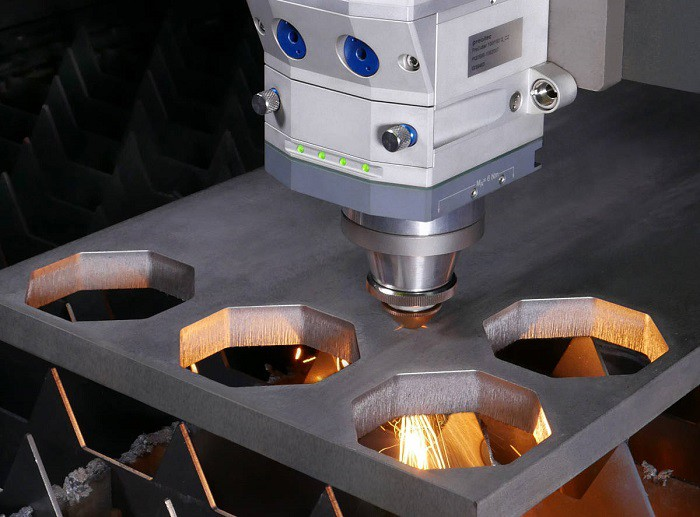
The process begins with the tube being loaded onto the machine, either manually or through an automated bundle loader. Once in position, pneumatic chucks clamp the tube securely while servo motors rotate it and feed it axially along the cutting bed. The fiber laser beam, delivered through a sealed optical path, melts or vaporizes the metal along a pre-programmed path. A coaxial nozzle blows high-pressure assist gas—oxygen, nitrogen, or compressed air—to clear molten material and produce a clean, burr-free edge.
The cutting head moves in multiple axes while the tube rotates, enabling three-dimensional processing that includes not just straight cuts but also complex intersecting joints, saddle cuts, and weld-ready bevels. This integrated approach eliminates the need for secondary drilling or manual coping, reducing setup changes and positioning errors.
Power Options and Cutting Capabilities
Metal tube laser cutting machine are available across a wide power range, and the choice of laser power directly determines the thickness and speed the machine can handle. Entry-level systems at 1.5 kW are suited for thin-wall tubes and small-batch production, cutting carbon steel up to roughly 3.5 mm thick. At 2 kW, the machine can handle medium-thickness tubes with stable cutting up to 8–10 mm in carbon steel, while 3 kW systems push into thicker-walled and high-volume production territory.
For heavier industrial work, machines with 6 kW and above are available, with some systems configured up to 20 kW for processing thick structural profiles and large-diameter tubes. The laser source itself has a service life often rated at around 100,000 hours, and fiber lasers offer high electrical-to-optical conversion efficiency, translating to lower operating costs compared to older CO2 technology.
Tube Sizes and Material Compatibility
A metal tube laser cutting machine is built to handle a diverse range of tube profiles. Round tubes are the most common, with processing ranges typically spanning from around 10 mm up to 273 mm in diameter on standard models, and some heavy-duty systems accommodating tubes up to 850 mm. Square and rectangular tubes are equally supported, with typical ranges from 15×15 mm up to 200×200 mm or larger depending on the model.
Material compatibility is broad. Carbon steel, stainless steel, aluminum, galvanized steel, copper, and brass can all be processed, though each material presents different cutting characteristics. Stainless steel generally benefits from nitrogen assist gas for clean, oxide-free edges, while carbon steel often uses oxygen for faster cutting speeds. Highly reflective materials like copper and brass require higher power levels and anti-reflective protection on the optics to prevent damage to the cutting head.
Key Components That Drive Performance
The chucks are one of the most critical mechanical systems on the machine. Pneumatic chucks grip the tube and rotate it during cutting, and their positioning accuracy directly affects part quality. High-precision chucks can achieve repositioning accuracy of ±0.05 mm or tighter, ensuring consistent cuts across batch production.
The cutting head houses the focusing optics and the nozzle. Automatic focus adjustment allows the machine to maintain optimal focal distance as tube diameter and wall thickness change, while capacitive height sensing keeps the head at the correct standoff from the tube surface. Some advanced heads also feature collision protection and remote monitoring cameras.
The CNC control system coordinates all motion, from tube feeding and rotation to cutting head movement and gas control. Modern controllers support common CAD/CAM file formats and include nesting software that optimizes material utilization, reducing waste and lowering production costs.
What to Consider When Choosing One
The first step in selecting a machine is defining the tube dimensions and materials you process most frequently. A machine rated for 220 mm maximum diameter will handle most standard fabrication work, but if your production involves large structural profiles or thick-walled pipe, a heavier-duty configuration may be necessary.
Production volume is the next major factor. For high-volume, multi-shift operations, automatic loading and unloading systems become essential. A bundle loader can reduce loading time to as little as 25 seconds, and automated part sorting keeps the workflow continuous from cutting to storage. For lower-volume shops or job shops with varied work, a machine with manual loading and flexible programming may be more cost-effective.
Cutting quality requirements also shape the decision. If your parts require tight tolerances, complex bevels, or weld-ready edges, you will want a machine with high positioning accuracy and 3D bevel cutting capability. If standard straight cuts and simple holes are the primary requirement, a more basic configuration can deliver the needed results without overinvestment.
Maintenance: Keeping the Machine Cutting
A metal tube laser cutting machine requires structured maintenance to maintain cutting precision and avoid unexpected downtime. Daily tasks include cleaning slag and dust from collection containers, inspecting the protective plate, checking the chiller temperature and water circuit, and verifying the pneumatic system for leaks.
Weekly maintenance focuses on lubrication and cooling: checking the circulating water pipeline, refilling the automatic lubrication container, and cleaning dust from the chiller condenser. At longer intervals—around 500 operating hours—the X-axis guide rail, gear, and rack should be cleaned and re-oiled, and the lubrication oil replaced. At 1000 hours, the Y- and Z-axis guide rails and ball screws require cleaning and re-greasing.
The chiller deserves particular attention. If the condenser becomes blocked by dust, heat dissipation efficiency drops and laser stability suffers. Cleaning the filter screen at regular intervals helps prevent this. Any chiller abnormality can directly affect laser performance, making it a key maintenance priority.
What It Replaces and Why It Matters
Before tube laser cutting became accessible, fabricators relied on saws, drills, punches, and plasma cutters to process metal tubes. Each operation required separate setups, hard tooling, and often manual finishing. A metal tube laser cutting machine compresses these steps into a single workstation, producing finished parts with clean edges and minimal secondary processing.
The efficiency gains are substantial. Laser cutting eliminates the need for rigid molds and mechanical tools, enabling faster changeovers between different tube profiles and part designs. Material utilization improves through automatic nesting, which reduces tail waste and increases yield per tube. And because the cut quality is high enough to eliminate deburring in many applications, labor hours and consumable costs drop accordingly.
For manufacturers in automotive, furniture, fitness equipment, construction, and agricultural machinery, the metal tube laser cutting machine has become a standard tool for tube fabrication—one that delivers the precision, speed, and flexibility that traditional methods cannot match.