
Is Every Breast Lump a Cause for Concern?
Finding a breast lump can instantly trigger fear. Many people associate any lump with cancer, and that fear is understandable. However, the reality is much calmer than the assumption. Most breast lumps are not cancerous. Breast tissue naturally changes throughout life, and many of those changes can feel alarming even when they are medically harmless. The real issue is not the presence of a lump, but how it is handled. Awareness and timely medical evaluation matter far more than panic or delay.This blog explains breast lumps in simple, clear language. It covers what breast lumps are, why they happen, who gets them, how doctors check them, and when they need urgent attention.
What is a Breast Lump
A breast lump is any area of breast tissue that feels different from the surrounding tissue. It may feel harder, thicker, more swollen, or simply unusual to you. Some lumps are small and smooth, while others may feel firm or irregular. A lump can appear suddenly or develop slowly over time.
Breasts are made of glands, fat, connective tissue, and ducts. These tissues respond to hormones, age, pregnancy, breastfeeding, and even weight changes. Because of this, breast texture is not always the same. What feels like a lump today may feel different next month, especially in women who menstruate.
Why Breast Lumps Occur So Often
Breast lumps are common because breasts are hormonally active organs. Changes in estrogen and progesterone affect breast tissue throughout life. Many lumps are simply exaggerated responses to these normal hormonal shifts.
In younger women, breast tissue tends to be denser and more reactive. This makes lumps more noticeable but also more likely to be non cancerous. As women age, breast tissue becomes less dense, but the risk of cancer slowly increases, making evaluation more important even though most lumps are still benign.
Common Non Cancerous Causes of Breast Lumps
The majority of breast lumps fall into the non cancerous category. These conditions do not spread to other parts of the body and are often manageable with monitoring or simple treatment.
Fibroadenomas are among the most common causes, especially in younger women. These lumps usually feel smooth, firm, and rubbery. They move easily under the skin and are generally painless. They can stay the same size for years or slowly shrink over time.
Breast cysts are fluid filled sacs that can feel soft or firm. They may become painful or tender, particularly before menstruation. Cysts can appear suddenly and sometimes disappear just as quickly.
Hormonal breast changes can make the breasts feel lumpy, swollen, or sensitive. These changes often follow a pattern linked to the menstrual cycle and usually improve after periods.
Breast infections, which are more common during breastfeeding, can cause painful lumps along with redness, warmth, and fever. These require medical treatment but are not cancer.
Fat necrosis occurs when fatty tissue is damaged due to injury, surgery, or radiation. It can feel firm and worrying, but it is harmless.
Cancer Related Breast Lumps
Cancerous breast lumps are much less common, but they need careful attention. These lumps often feel different from benign ones, though this is not always obvious without testing.
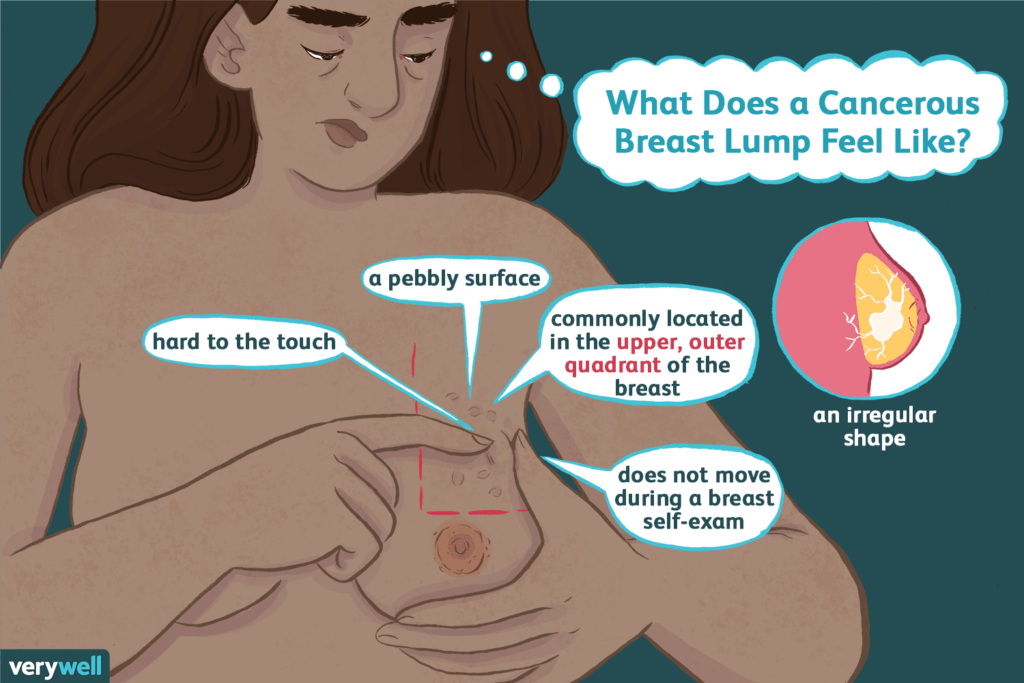
Cancer related lumps tend to be hard and irregular in shape. They may not move easily under the skin and are often painless in the early stages. Some grow slowly, while others change more quickly. A lump alone does not confirm cancer, but certain features raise concern and require prompt evaluation.
How Texture, Pain, and Movement Matter
Doctors consider several physical characteristics when examining a breast lump, but none of these alone can give a final answer.
Soft and movable lumps are more often benign, while hard and fixed lumps may need further testing. Pain is often associated with non cancerous conditions, but pain does not rule out cancer. Likewise, a painless lump does not automatically mean something serious.
These signs are clues, not conclusions. Medical tests are always needed for certainty.
Who Is More Likely to Notice Breast Lumps
Breast lumps can appear at any age and in any gender, though they are far more common in women.
Factors that increase the likelihood of noticing a lump include hormonal changes, pregnancy, breastfeeding, family history of breast cancer, increasing age, and previous breast conditions. Having these factors does not mean a lump is dangerous. It simply means awareness and regular checkups are important.
When a Breast Lump Should Not Be Ignored
Some breast changes require immediate medical attention. Ignoring them can delay diagnosis and treatment.
You should see a doctor promptly if a lump is new and does not go away after one menstrual cycle, or if it appears after menopause. Changes in breast size or shape, skin dimpling, nipple inversion, unusual nipple discharge, persistent redness, or thickened skin are also warning signs that need evaluation.
Early medical advice does not mean bad news. It means clarity.
How Doctors Evaluate a Breast Lump
Medical evaluation follows a structured process. Each step provides more information and reduces uncertainty.
A clinical breast examination allows the doctor to assess the lump’s size, shape, texture, and mobility. The underarm area is also checked, as lymph nodes can provide important clues.
Imaging tests are commonly used next. Ultrasound is often preferred for younger women and helps determine whether a lump is solid or fluid filled. Mammograms are commonly used for women over forty or when cancer risk is higher.
If imaging results are unclear or suspicious, a biopsy may be recommended. This involves taking a small tissue sample for laboratory analysis. While the word biopsy sounds frightening, most biopsy results show non cancerous conditions.
Breast Lumps During Pregnancy and Breastfeeding
Pregnancy and breastfeeding bring major changes to the breasts. Lumps during this time are common and usually related to milk production or infection.
Blocked milk ducts can cause firm, tender lumps that improve with feeding or massage. Mastitis causes painful swelling along with redness and fever and needs medical treatment. Milk filled cysts can also develop and are usually harmless.
Any lump that persists, grows, or does not respond to treatment should still be evaluated to rule out rare but possible serious causes.
Breast Lumps in Men
Men can also develop breast lumps, though it is far less common. Causes include hormonal imbalance, fatty tissue growth, infections, and in rare cases, breast cancer.
Because male breast cancer is uncommon and often diagnosed late, any breast lump in a man should be checked by a doctor without delay.
What You Can Safely Do at Home
Being familiar with your own body helps you notice changes early. Regular self awareness is useful, but self diagnosis is not reliable.
Helpful habits include checking your breasts once a month, preferably after menstruation, and paying attention to changes rather than searching for perfection. Avoid assuming that pain means safety or that youth means zero risk. Waiting too long out of fear often causes more stress than early evaluation.
The Emotional Impact of Finding a Lump
Discovering a breast lump can cause anxiety, sleeplessness, and fear about the future. These feelings are normal. What helps most is action. Seeing a healthcare professional, getting accurate information, and avoiding worst case assumptions reduce emotional strain.
Most breast lumps turn out to be benign. Knowing this does not remove the need for testing, but it does put fear into perspective.
Frequently Asked Questions
Can stress cause breast lumps
Stress does not directly create lumps, but it can affect hormones, which may make breast tissue feel more swollen or lumpy.
How long should I wait before seeing a doctor
If a lump lasts longer than one menstrual cycle or appears after menopause, it should be checked promptly.
Are painful breast lumps dangerous
Painful lumps are often non cancerous, but pain alone cannot determine risk. Medical evaluation is still important.
Can a breast lump disappear on its own
Yes, some hormonal lumps and cysts resolve without treatment. Persistent lumps should always be evaluated.
Is breast cancer common in young women
It is less common but still possible. Age reduces risk, not responsibility.
Do all breast cancers start as lumps
No. Some start with skin changes, nipple changes, or abnormal imaging findings.
Is a movable lump always safe
Movable lumps are often benign, but movement alone does not guarantee safety.
Final Thoughts
Not every breast lump is a cause for concern, but every breast lump deserves attention. Most lumps are harmless, especially in younger people, but only proper medical evaluation can confirm that. Ignoring a lump does not protect you. Facing it early gives you control, clarity, and peace of mind.If you notice a change, do not panic. Do not delay. Get it checked and move forward with confidence.