
What a floor coating topcoat Is and How It Works
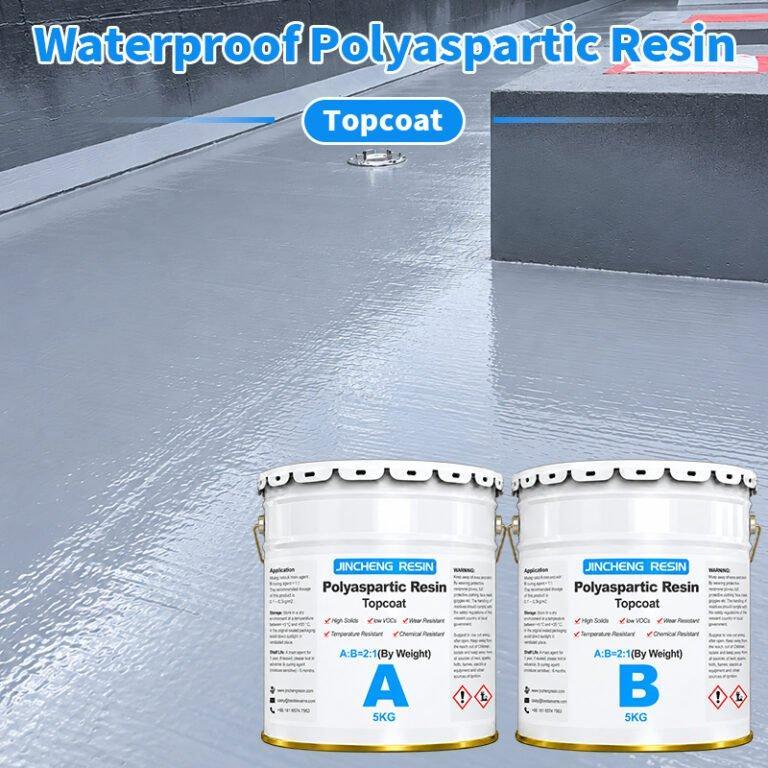
Every coated floor has a layer you see and a system you do not. The layer you see is the topcoat: the outer skin of the floor coating system, spread over the primer and base coats to protect them and to give the floor its finish. A floor coating topcoat decides how the floor looks, how it feels underfoot, and how well it stands up to traffic, spills and sunlight.
Topcoats come in several types, and the two most common in the Jincheng range are polyaspartic and epoxy. They look similar once they are down, but they behave differently, in how fast they cure, how they handle sunlight, and where they work best. This article explains what a topcoat does, how the two main types compare, and what to weigh up before choosing one.
The final layer of the system
A floor coating is built from the concrete up. The primer goes on first and soaks into the surface so the system can grip. The base coat, often an epoxy, builds thickness and can carry colour or decorative flakes. The topcoat goes on last and seals everything beneath it. It is a thin layer, but it carries the most responsibility for how the floor performs day to day.
Think of the topcoat as doing three things at once. It shields the coats below from wear, chemicals and moisture. It sets the finish, high gloss, satin or matte, and the colour. And it decides the surface qualities people notice first: how easy the floor is to clean, and how much grip it has when wet. When the topcoat wears out, the layers below are exposed, which is why choosing it well matters.
Polyaspartic and epoxy: the two main choices
Polyaspartic topcoats are the fast option. They cure quickly, so a floor can be back in use sooner, and the resin resists yellowing in sunlight, which makes them suitable for outdoor concrete and parking areas as well as indoors. Products in this family are often listed with high solids content, low viscosity and strong self-levelling, and the Jincheng range includes an 85% solids version built for scratch, stain and chemical resistance.
Epoxy topcoats are the established indoor choice. They give a hard, smooth finish, resist many chemicals, and suit warehouses, workshops and garages that stay out of strong sunlight. They cure more slowly, which gives a first-timer a longer working time, but they can yellow outdoors. The choice between the two comes down to where the floor is, how fast it must be back in use, and how much sun it sees.
What a topcoat has to stand up to
A floor takes more punishment than almost any other surface in a building. Feet, wheels, pallets and dropped tools wear it down. Oil, fuel, solvents and cleaning products attack it chemically. Sun and rain weather it from above. A floor coating topcoat has to handle all of that while staying bonded to the coats beneath it, which is why the choice is made on the real conditions rather than the colour chart.
That is also why the supplier asks so many questions before recommending a product. Jincheng asks buyers about the floor condition, the traffic, the chemicals, the look they want and whether the existing coating system is compatible. The answers point to the right type, the right finish and the right thickness, and to the cases where a different product altogether would serve better.
- Abrasion from feet, wheels, pallets and dropped tools
- Spills of oil, fuel, solvents and cleaning products
- Sunlight and weather on outdoor floors
- Daily cleaning and the grip needed when wet
Choosing one for your floor
Start with the space itself. An indoor workshop floor and an outdoor parking area need different topcoats, and a showroom floor needs a different finish from a warehouse. List the traffic, the chemicals and the amount of sunlight, then check that list against the product data. Colour and gloss come last, once the practical choice is made.
Before ordering, ask for the technical data sheet, the safety data sheet, the mixing ratio and the curing information, and ask whether a sample is available. Jincheng offers samples before bulk orders, so the finish and the compatibility with your floor system can be tested first. A topcoat bought after that check is a far safer purchase than one ordered on a description alone.
A floor coating topcoat is a thin layer with a large job: sealing the floor coating system, protecting the coats below, and giving the floor its look and its grip. Understand the two main types, match the product to the real conditions, and check the data sheets and a sample before you buy. Take that care, and the floor will hold up for years.