
Hot Top Billet Casting Machines vs. Traditional Casting: What’s the Difference?
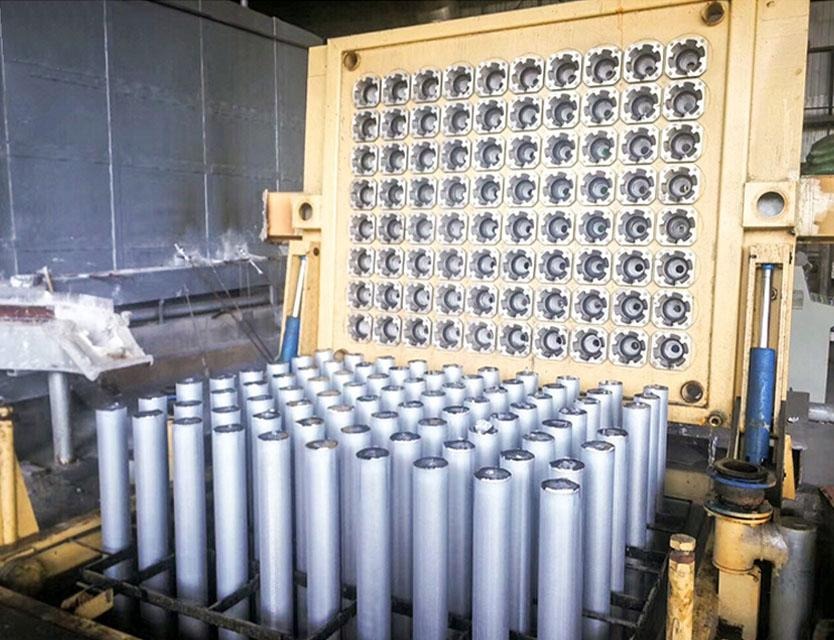
A casthouse manager in the Gulf had two quotes on his desk last spring. One was for a conventional direct-chill casting line — the kind the industry has run for decades. The other was for a hot top billet casting machine, priced noticeably higher. His finance team asked a fair question: what exactly does the extra money buy? The honest answer starts inside the mold, in the first seconds after the metal arrives, and it ripples through everything the plant produces afterward. His plant mainly supplies extrusion billet to profile makers, so surface quality is not an abstract concern for him — it shows up on every customer claim and every tonne of scalping waste.
What “Traditional” Casting Means Here
When people in the aluminum business say “traditional casting,” they usually mean conventional vertical direct-chill casting without a hot top. Molten metal travels from the furnace through a launder and drops straight into open mold tops. The metal surface — the meniscus — sits exposed to air, losing heat while the shell tries to form against the water-cooled mold wall below. Oil or gas lubrication helps the shell release, but the top of the mold is essentially a cold, uncontrolled zone. It is a rugged, proven setup, and thousands of plants still run it every day. It remains the default choice wherever a hot top billet casting machine cannot justify its price on the product mix.
The Core Difference: What Happens at the Meniscus
A hot top billet casting machine changes that top zone completely. A heated distribution trough — the “hot top” — sits directly on the mold, usually with a graphite ring at the metal entry point. Molten aluminum enters the mold already hot and, crucially, stays hot at the surface while the solid shell forms below against the cooled mold wall. There is no cold, exposed meniscus freezing in fits and starts. That one thermal difference is the root of every advantage a hot top billet casting machine delivers downstream.
Surface Quality, Side by Side
Billet customers care about surface because every defect on the outside either gets machined off or causes trouble in the press. Billets from a hot top billet casting machine typically emerge with a smoother, more uniform skin — fewer laps, fewer drag marks, fewer bleeds. Conventionally cast billets are by no means bad, but they usually carry more surface character, which means the customer scalps (machines) a thicker layer off. Every millimeter of scalping is prime metal turned into chips, so surface quality is really a yield question in disguise — and it is exactly the question a hot top billet casting machine is designed to answer.
Yield and Recovery: The Numbers That Convince Finance
This is where the finance team starts nodding. A hot top billet casting machine lifts recovery in two ways: thinner scalping losses and steadier cast starts, which cut the cropped-off butt and head waste. Operators running a hot top billet casting machine also report fewer aborted casts, because the stable meniscus is far more forgiving during the critical start-up phase. Put numbers on it: a casthouse pouring 20,000 tonnes a year that gains two percentage points of recovery keeps 400 extra tonnes as prime billet instead of remelt. At today’s metal values, that pays back the equipment premium faster than most managers expect. The machine does not just cast better billets — it casts more sellable metal from the same melt.
Where Traditional Casting Still Wins
None of this makes conventional casting obsolete. A traditional DC line costs less to buy, less to maintain, and asks less of its operators — there are no heated troughs to preheat and no graphite rings to monitor and replace. For shops casting commodity grades destined for remelt, or forging stock whose surface gets heavily worked anyway, the premium surface of a hot top billet casting machine buys little. The day-to-day reality of running a hot top billet casting machine also involves more preheat discipline and tighter process control, which not every crew is set up for. Plenty of profitable plants run conventional molds because their product mix simply does not need more.
Making the Call
So back to the manager with two quotes. The decision rule is straightforward: if your customers are extruders with tight surface specs, or you cast high-value alloys where every kilo of scrap hurts, a hot top billet casting machine earns its premium through yield and quality. If you melt commodity metal for undemanding applications, the traditional line is the rational, economical choice. In short, a hot top billet casting machine is a yield machine disguised as a casting machine — and knowing which job you are doing is the whole decision. Get that match right and the equipment pays for itself; get it wrong and you have bought precision you will never use.